By Staff Reporter
ISLAMABAD: Pakistan is in the final stages of sealing a $1.5 billion agreement to supply weapons and aircraft to Sudan, a former senior air force official and three people familiar with the negotiations told Reuters, a move that could significantly strengthen Sudan’s military in its grinding war against a powerful paramilitary group.
The deal, reported on Friday, comes as Sudan’s conflict — now in its third year — has unleashed the world’s most severe humanitarian catastrophe, displacing millions and drawing in a web of international players eager to influence the outcome in this strategically vital Red Sea nation, one of Africa’s leading gold producers.
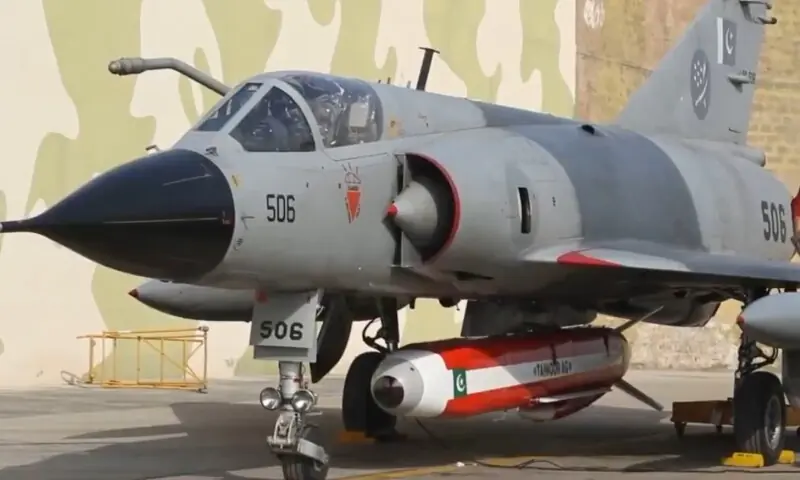
The package includes 10 Karakoram-8 light attack jets, more than 200 drones designed for reconnaissance and suicide strikes, and sophisticated air defense systems, two of the three sources, who spoke on the condition of anonymity, told Reuters. It was a “done deal,” said Aamir Masood, a retired Pakistani air marshal who remains informed on air force developments.
In addition to the Karakoram-8 aircraft, the agreement encompasses Super Mushshak training planes and possibly some JF-17 fighter jets, a model co-developed with China and manufactured in Pakistan, Masood added, though he did not specify quantities or a timeline for delivery.
Pakistan’s military and Defence Ministry did not immediately respond to requests for comment. A spokesman for Sudan’s army also did not immediately reply to a message seeking confirmation.
The infusion of Pakistani hardware, particularly drones and jets, could restore the air dominance that Sudan’s army enjoyed early in the war against the Rapid Support Forces. The paramilitary group has ramped up its use of drones in recent months, allowing it to seize ground and weaken the army’s hold on key territories.
For Pakistan, the prospective sale represents another milestone for its expanding defence industry, which has attracted heightened attention and funding, especially after its aircraft saw action in a skirmish with India last year. Just last month, Islamabad inked a weapons pact valued at more than $4 billion with the Libyan National Army, one of the largest arms exports in the South Asian country’s history. That deal includes JF-17 fighters and training aircraft.
Pakistan has also engaged in discussions with Bangladesh about a potential defence agreement that could feature Super Mushshak trainers and JF-17s, as relations between the two nations warm. Pakistani leaders view the flourishing arms sector as a key driver for achieving enduring economic security. The country is currently in a $7 billion International Monetary Fund bailout programme, secured after a brief arrangement in 2023 that staved off a sovereign default. That support came on the heels of financial aid and deposit extensions from Saudi Arabia and other Gulf partners.
Earlier this week, Reuters reported that Pakistan and Saudi Arabia are negotiating to convert roughly $2 billion in Saudi loans into a deal for JF-17 fighter jets. Reuters pegged the overall deal at $4 billion, including an extra $2 billion for related equipment beyond the loan conversion. On Tuesday, defence minister, Khawaja Asif, hailed the defence industry’s progress as a potential economic game-changer. “Our aircraft have been tested, and we are receiving so many orders that Pakistan may not need the International Monetary Fund in six months,” he told a private news channel.
Copyright © 2021 Independent Pakistan | All rights reserved