By Staff Reporter
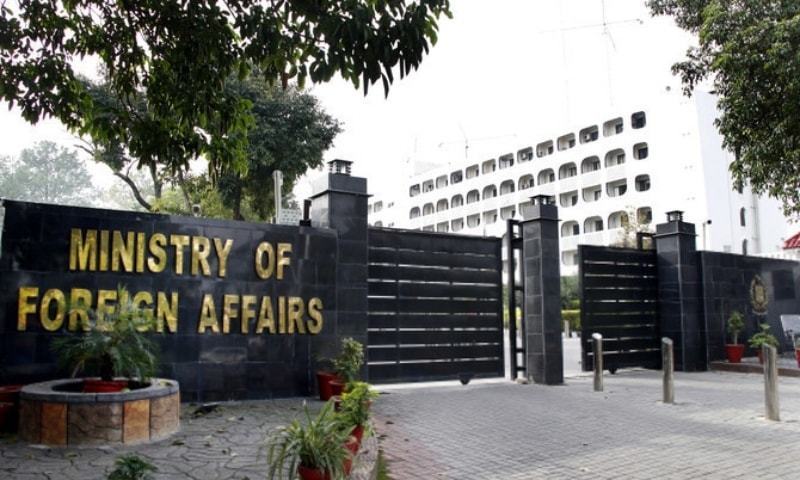
ISLAMABAD: The Foreign Office on Saturday dismissed as “misleading and unfounded” recent commentary surrounding the return of financial deposits from the United Arab Emirates, insisting the transaction was a straightforward maturity of bilateral commercial agreements.
The statement came one day after a senior Pakistani official disclosed that the country planned to repay about $3.5 billion in such deposits before the end of April. Abu Dhabi had requested the immediate return of the funds, which originated as balance-of-payments support extended by the UAE in 2019, the official said.
Foreign Office spokesperson Tahir Andrabi said the deposits were placed under bilateral commercial agreements that demonstrated the UAE’s support for Pakistan’s economic stability. “Pursuant to mutually agreed terms, the government, through the State Bank of Pakistan, is now returning the matured deposits to the UAE,” he said in the statement. “This is a routine financial transaction, and any attempt to portray it otherwise is erroneous and misleading.”
Andrabi emphasised the depth of the bilateral relationship. Pakistan and the UAE share a “longstanding, fraternal partnership built on trust and strategic cooperation across trade, investment, defence, and people-to-people ties,” he said. The relationship, he added, had “stood the test of time and grown stronger with each passing year.” He noted the “pivotal role” played by the late Sheikh Zayed bin Sultan Al Nahyan in forging the ties and Pakistan’s appreciation for his “special affection” for the country. Islamabad, he concluded, remained “fully committed to further strengthening this enduring relationship for a shared, prosperous future.”
The deposits were originally channeled through the Abu Dhabi Fund for Development. They had been rolled over several times since 2019. In recent months the extensions had shortened to as little as one month, reflecting Emirati unease over the continuation of the arrangement, according to officials familiar with the matter. The decision to repay ends that uncertainty, the senior official said Friday.
Pakistan is operating under a $7 billion International Monetary Fund program that runs through September 2026. As part of the arrangement, the country must secure roughly $12.5 billion in rollovers and new financing from three key partners — China, Saudi Arabia and the UAE — to keep foreign-exchange reserves stable and meet external obligations. The UAE funds have formed a critical piece of that patchwork.
Central bank reserves stood at about $16.3 billion in the latest available data. Repayment of the UAE deposits would reduce that buffer significantly — by roughly 18 percent if measured against a $3 billion portion of the total — trimming import cover and the country’s external cushion at a time when the rupee remains under pressure.
The Ministry of Finance sought to reassure markets on Friday, posting on X that it was “continuously monitoring and managing Pakistan’s external flows in order to ensure stable foreign exchange reserves.” The government “remains committed to fulfilling all its external obligations,” the ministry added.
Local media had reported a repayment schedule that included $450 million due as early as April 11, $2 billion on April 17 and a further $1 billion on April 23. Officials did not confirm the precise timetable in public statements but acknowledged the move would have implications for reserve levels. They described the decision as driven by evolving bilateral considerations and Abu Dhabi’s demand for settlement.
Economic analysts warned that the outflow could add pressure on the rupee and complicate Pakistan’s IMF program compliance if not offset by fresh inflows. No immediate replacement financing was signaled by officials.
Copyright © 2021 Independent Pakistan | All rights reserved