By Staff Reporter
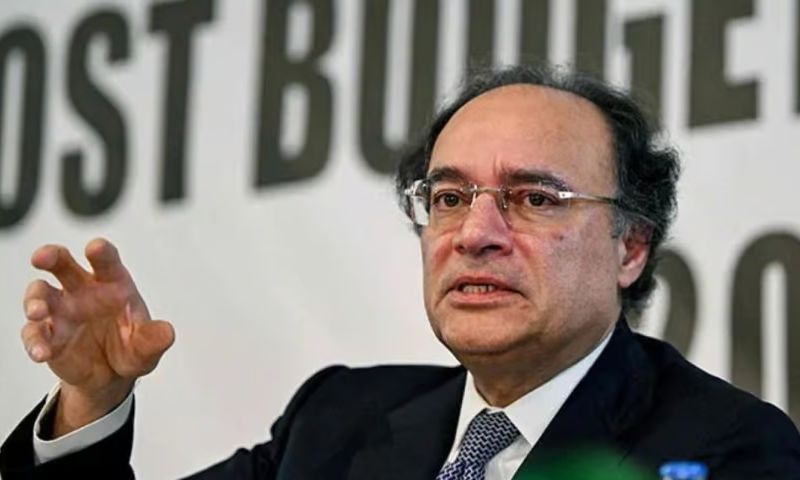
ISLAMABAD: Pakistan is ditching its reliance on foreign aid in favor of deeper trade and investment ties, particularly with Gulf Cooperation Council nations, as the South Asian economy stabilises after a bruising period of high inflation and external pressures, Finance Minister Muhammad Aurangzeb said.
“We are not looking for aid flows anymore,” Aurangzeb said in an interview with CNN Business Arabia. “For us, we are very clear … that going forward is really trade and investment, which is going to bring sustainability and be win-win for our longstanding bilateral partners in GCC and for Pakistan.”
The strategic measures, initiated by Prime Minister Shehbaz Sharif, shows Islamabad’s growing confidence amid an 18-month macroeconomic stabilisation drive that has yielded “tangible and measurable” results, the finance minister said. Inflation, which spiked to an unprecedented 38% in 2023, has dropped to single-digit levels, while the nation has posted primary fiscal surpluses and held the current account deficit “well within” targeted limits.
The exchange rate has stabilised, and foreign exchange reserves have climbed to about 2.5 months of import cover, bolstering external buffers. Two key endorsements from abroad validate the progress: All three major international credit rating agencies have upgraded Pakistan’s ratings and outlook this year, and the International Monetary Fund’s executive board approved the second review under its Extended Fund Facility earlier this week.
Such steps signal “growing international confidence in Pakistan’s economic management and reform trajectory,” Aurangzeb said. The stabilisation stems from a blend of tight monetary and fiscal policies paired with sweeping structural changes. “Reforms are being implemented across key areas, including taxation, energy, state-owned enterprises, public financial management, and privatisation, aimed at consolidating stability and laying the foundation for sustainable growth,” he said.
On the tax front, Pakistan’s tax-to-GDP ratio climbed to 10.3% in the last fiscal year from 8.8% at the program’s outset, with a trajectory toward 11%. “This is being pursued through widening the tax base by bringing previously undertaxed but economically significant sectors such as real estate, agriculture, and wholesale and retail trade into the formal net, alongside deepening compliance by reducing leakages through production monitoring systems and AI-enabled technologies,” the minister said. “Simultaneously, the tax administration is being transformed through reforms in people, processes, and technology.”
In energy, the focus is on bolstering governance at power distribution companies, injecting private-sector know-how, pushing privatisation and curbing circular debt that has hobbled the industry for years. “Rationalising the tariff regime is essential to making energy more competitive for industry, thereby enabling industrial revival and economic growth,” he stressed.
Aurangzeb credited GCC countries, Saudi Arabia, the United Arab Emirates, Qatar, Kuwait, Oman and Bahrain, for their historical backing through financing, funding and advocacy at institutions like the IMF. That bond is now morphing into one emphasising trade growth and capital inflows. Remittances remain a cornerstone, hitting about $38 billion last year and on pace for $41 billion to $42 billion this year, with more than half flowing from GCC states.
Pakistan is courting Gulf investors in high-potential areas like energy, oil and gas, minerals and mining, artificial intelligence, digital infrastructure, pharmaceuticals and agriculture. Talks on a free trade agreement with the GCC are at an “advanced stage,” Aurangzeb said. “Pakistan’s future lies in fostering trade and investment partnerships rather than reliance on aid,” he said, adding that foreign direct investment would propel GDP expansion and job creation. “This FDI is going to help us in terms of GDP growth [and] more employment opportunities as we go forward.” “The government is fully mobilised to translate this vision into reality.”
Copyright © 2021 Independent Pakistan | All rights reserved