By Staff Reporter
ISLAMABAD: Pakistan has set an ambitious tax revenue target of Rs13 trillion for the fiscal year starting July 1, a 40 percent jump from the current year, as it seeks to bolster its case for a new bailout deal with the International Monetary Fund (IMF) worth upto $8 billion.
The government is seeking a loan of $6 billion to $8 billion from the IMF to avert a default and stabilize its economy, which is growing at the slowest pace in the region. The country received $3 billion from the IMF under a Stand-By Arrangement (SBA) last year to address immediate financial needs such as debt repayments and support economic reforms.
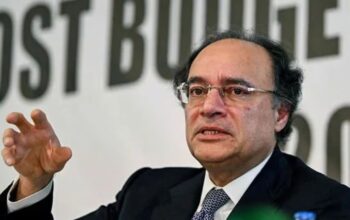
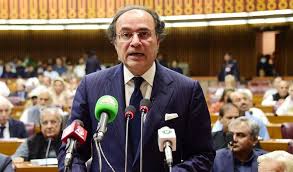
Finance Minister Muhammad Aurangzeb unveiled the budget for the fiscal year 2024-25 in the noisy parliament, with lawmakers from former Prime Minister Imran Khan’s party shouting slogans to disrupt his speech.
The budget deficit is projected to be 6.9 percent of GDP, while the primary surplus is expected to be at 1.0 percent of GDP. The government’s spending totals Rs18.877 trillion, with key objectives including reducing the public debt-to-GDP ratio and improving the balance of payments position.
An optimistic sharp drop in the fiscal deficit to 5.9% of GDP is projected, from an upwardly revised estimate of 7.4 percent for the current year. GDP is expected to expand by 3.6% during the next fiscal year.
The rise in the tax target comprises a 48% increase in direct taxes and a 35% hike in indirect taxes over the revised estimates of the current year. Non-tax revenue, including petroleum levies, is expected to increase by a whopping 64%.
The minister said the sales tax would increase to 18% on textile and leather products as well as mobile phones. A hike in the tax on capital gains from real estate was also announced.
Privatization proceeds were projected at a modest Rs30 billion. Bids for the national airline PIA would come in August.
Aurangzeb expressed optimism over the economy’s prospects, citing a recent uptick, falling inflation, and an interest rate cut and the government is now focused on achieving sustainable growth.
“Mr. Speaker, we need to increase the speed of our progress and achieve the destination of economic independence,” the minister said.
“But this is not something that can be done overnight. For this, we need to work hard and collaborate with all institutions and the people on a homegrown economic reform plan.”
Aurangzeb credited Prime Minister Shehbaz Sharif with fulfilling the conditions of Pakistan’s SBA agreement with the IMF, noting positive trends in economic indicators.
“Mr. Speaker, I believe that despite political and economic challenges, our progress on the economic front in the past year has been impressive.”
The government has devised the largest Public Sector Development Program (PSDP) in history, worth Rs1,500 billion ($5.3 billion), a 101% increase from the previous year’s revised volume.
“The government has devised the largest PSDP in history for the fiscal year 2024-25, which is worth Rs1,500 billion, and its volume is 101% larger than the previous year’s revised volume,” the minister said.
The government also announced salary and pension increments for government employees, with a 25% raise for employees below grade 17 and a 20% increase for employees in the 17-22 grade range. The minimum wage was increased from Rs32,000 to Rs37,000.
Tax slabs for salaried group will change, while the income tax rate for non-salaried individuals can go as high as 45 percent. However, the minimum tax slab will remain the same at Rs600,000 per year. The gain on capital tax (CGT) on securities for non-filers will be kept at 45%, while it will remain at 15% for filers.
The minister stressed the need for Pakistan to transition from a government-driven economy to a market-driven one, aligning with global standards and prioritizing savings and investment over consumption.
“We must transition from a government-driven economy to a market-driven one, boosting exports and prioritizing a savings-and-investment-based economy over a consumption-based model,” the minister emphasized.
Analysts said the budget aims to continue fiscal consolidation and align with IMF guidelines.
“The budget is broadly in line with IMF guidelines, which will help in securing a long-term financing facility,” Mohammad Sohail, CEO of brokerage Topline Securities, said. “Though no major reforms were seen on exports, energy, and other sectors, many tax exemptions have been removed, and significant tax measures have been taken to secure incremental tax revenues of Rs3.7 trillion.”
Sohail believes the tax measures are “quite balanced and less inflationary than expected” and will pave the way for the IMF program if approved by parliament.
“We believe the GDP target of 3.6% is achievable, as industries have started reflecting a V-shaped recovery,” he said. “The services sector is also expected to grow by 4.1%, and we believe, on the back of a low base, expected recovery in industrial growth, and subsequent advances of the banks, the services sector is also expected to post a growth of over 4%, as projected by the government.”
Copyright © 2021 Independent Pakistan | All rights reserved