Pakistan’s inflation fastest in Asia for second month

Pakistan’s inflation fastest in Asia for second month

By Staff Reporter

ISLAMABAD: Pakistan’s inflation hit another record high in May, making it Asia’s fastest for a second month, just days before the next fiscal budget is due to be unveiled in a country facing unprecedented economic challenges.

Consumer prices rose 37.97 percent from a year earlier, according to data released by the Pakistan Bureau of Statistics on Thursday.

On a month-on-month basis, it increased to 1.6 percent in May 2023 compared to an increase of 2.4 percent in the previous month and an increase of 0.4 percent in May 2022.

Core inflation in Pakistan, which excludes food and energy components, hit its highest level since 2010 in May 2023, rising from 19.5 percent in April to 20 percent.

This is the indicator that sensitizes the central bank on whether to increase the discount rate. The current policy rate is 21 percent.

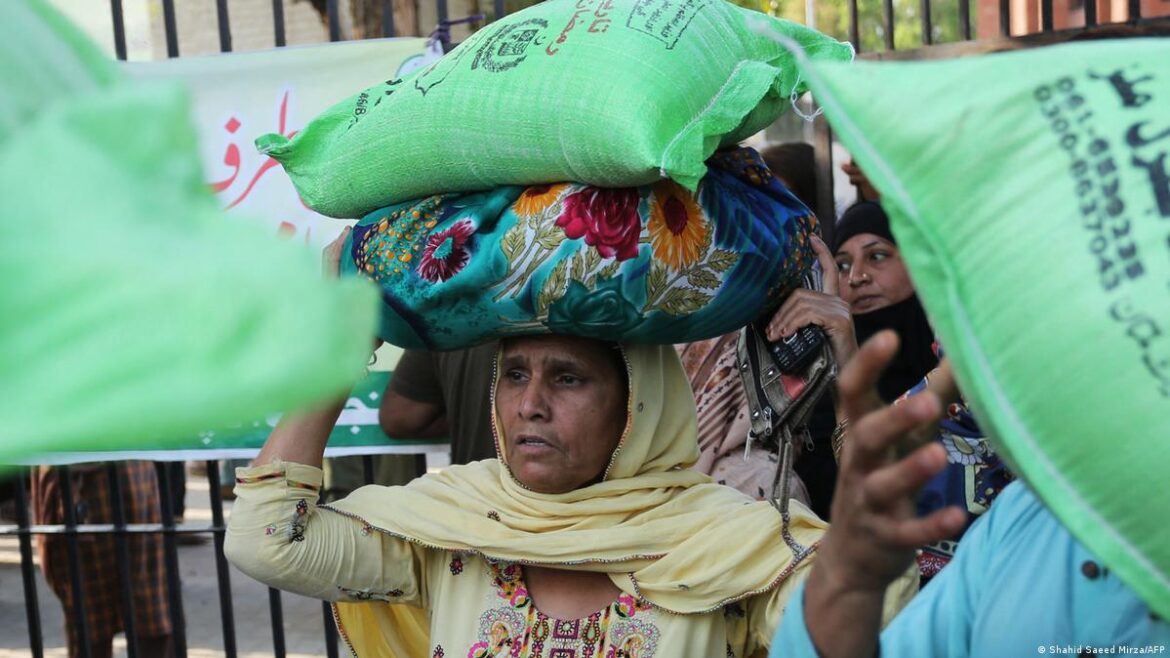
“This level of inflation badly affects poor and middle-class families in the country, whose income is evaporating with each percentage point,” said analyst Mohammad Sohail.

Years of financial mismanagement have pushed Pakistan’s economy to the limit, exacerbated by a global energy crisis and devastating floods that submerged a third of the country in 2022.

A political crisis has added another layer of uncertainty — with former prime minister Imran Khan’s brief arrest last month sparking deadly street violence.

Analyst Sana Tawfiq at Arif Habib Limited said increased food, household, and apparel expenses were the main causes of the month-on-month hike.

“We expect headline numbers to recede from June onwards with the base effect kicking in. However, domestic food and energy prices, as well as further currency devaluation, remain key risks to overall inflation.”

The latest spike of 38 percent is higher than Sri Lanka’s, which in May reported annual inflation of 25.2 percent.

Inflation has been on the rise since the government implemented severe measures as part of the fiscal adjustments required by the International Monetary Fund (IMF) to unlock frozen cash from a $6.5 billion loan deal that has still not been delivered.

The country needs billions of dollars in financing to service staggering levels of external debt, and foreign exchange reserves have dwindled to just $4.2 billion, barely enough for a month of imports.

Copyright © 2021 Independent Pakistan | All rights reserved

Pakistan’s inflation fastest in Asia for second month

By Staff Reporter

ISLAMABAD: Pakistan’s inflation hit another record high in May, making it Asia’s fastest for a second month, just days before the next fiscal budget is due to be unveiled in a country facing unprecedented economic challenges.

Consumer prices rose 37.97 percent from a year earlier, according to data released by the Pakistan Bureau of Statistics on Thursday.

On a month-on-month basis, it increased to 1.6 percent in May 2023 compared to an increase of 2.4 percent in the previous month and an increase of 0.4 percent in May 2022.

Core inflation in Pakistan, which excludes food and energy components, hit its highest level since 2010 in May 2023, rising from 19.5 percent in April to 20 percent.

This is the indicator that sensitizes the central bank on whether to increase the discount rate. The current policy rate is 21 percent.

“This level of inflation badly affects poor and middle-class families in the country, whose income is evaporating with each percentage point,” said analyst Mohammad Sohail.

Years of financial mismanagement have pushed Pakistan’s economy to the limit, exacerbated by a global energy crisis and devastating floods that submerged a third of the country in 2022.

A political crisis has added another layer of uncertainty — with former prime minister Imran Khan’s brief arrest last month sparking deadly street violence.

Analyst Sana Tawfiq at Arif Habib Limited said increased food, household, and apparel expenses were the main causes of the month-on-month hike.

“We expect headline numbers to recede from June onwards with the base effect kicking in. However, domestic food and energy prices, as well as further currency devaluation, remain key risks to overall inflation.”

The latest spike of 38 percent is higher than Sri Lanka’s, which in May reported annual inflation of 25.2 percent.

Inflation has been on the rise since the government implemented severe measures as part of the fiscal adjustments required by the International Monetary Fund (IMF) to unlock frozen cash from a $6.5 billion loan deal that has still not been delivered.

The country needs billions of dollars in financing to service staggering levels of external debt, and foreign exchange reserves have dwindled to just $4.2 billion, barely enough for a month of imports.

Copyright © 2021 Independent Pakistan | All rights reserved