By Staff Reporter
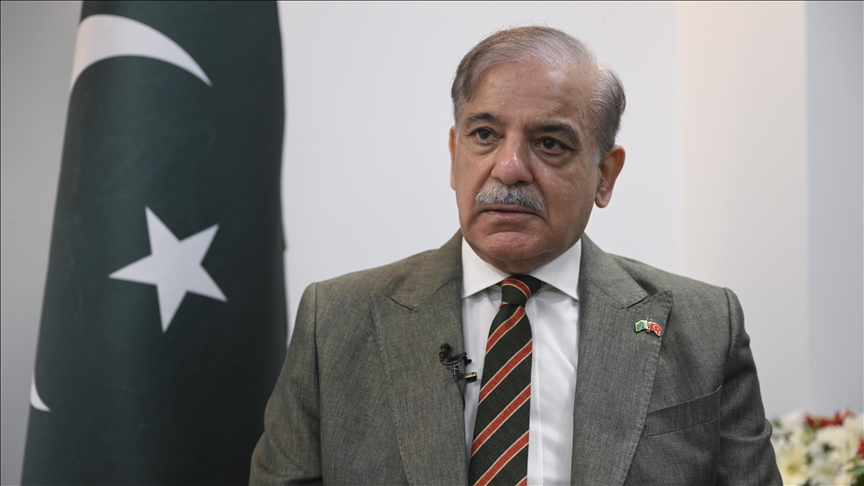
ISLAMABAD: Prime Minister Shehbaz Sharif directed the finance and petroleum ministers to coordinate with provincial governments on strategies to conserve petroleum products and guarantee uninterrupted supplies, a day after the country imposed its biggest-ever one-week fuel price increase.
The instructions, issued on Saturday during a high-level review of the economy, come as global oil markets reel from escalating US-Israel conflict with Iran and threats to key export routes. They follow Friday’s announcement of a 55-rupee-per-liter hike in both petrol and high-speed diesel, pushing pump prices to record levels and testing household budgets in an import-dependent economy.
According to a statement from the Prime Minister’s Office, Sharif chaired the meeting where officials briefed him on the latest global developments and their regional economic fallout. He ordered a broader strategy focused on austerity and savings to be prepared within 48 hours, with explicit instructions to limit the burden on ordinary citizens while prioritising public relief.
A committee the premier formed last week to monitor the Middle East tensions presented its assessment. The panel’s recommendations underpinned the price adjustment, with only the minimum possible portion of the global increase passed through to consumers, the statement said. Sharif told the group to accelerate work and deliver practical proposals for further relief as soon as possible.
The government moved swiftly to head off any supply disruptions or profiteering. Shehbaz directed that any petrol pump or company found creating artificial shortages or hoarding should be shut down immediately, its license revoked and legal proceedings launched. He also instructed the development of a real-time dashboard to track petroleum product movements nationwide, with data to be shared with provinces.
Information Minister Attaullah Tarar, posting on X, urged citizens to disregard rumors and speculation. He pointed to a late-Friday press conference by Deputy Prime Minister Ishaq Dar, Finance Minister Muhammad Aurangzeb and Petroleum Minister Ali Pervaiz Malik that outlined the reasons for the hike tied to the global situation. “The government of Pakistan and the concerned ministries will continue to release accurate and verified information from time to time,” Tarar wrote, noting that other countries are confronting similar pressures.
He confirmed the 48-hour deadline for the austerity plan and said the finance and petroleum ministers would meet the four provincial chief ministers to discuss anti-hoarding enforcement so that consumers are not exploited. “There will be no leniency for those involved in exploiting the public, and the licenses of those violating the orders will be cancelled,” Tarar added.
The directives build on a separate Friday meeting Sharif convened on supply security. Officials there confirmed that current petroleum reserves are adequate to meet domestic demand despite market volatility. The prime minister ordered the Oil and Gas Regulatory Authority to cancel licenses of any outlets engaged in hoarding and pursue legal action.
Separately, Khurram Schehzad, adviser to the finance minister, used X to explain the formula behind the increase, aiming to dispel misconceptions about inventory profits. Fuel prices are calculated from the average Platts benchmark for petrol and diesel over the pricing period, adjusted for exchange rates — not from the cost of any specific earlier cargo, he wrote. Oil companies are required by the Oil and Gas Regulatory Authority to maintain roughly 20 days of mandatory stocks — and in some cases more amid the current tensions. That means they sell from existing inventory while simultaneously buying replacement cargoes at today’s higher international prices. “So when a litre of fuel is sold today, it must be replaced with a litre purchased at current international prices to keep the reserve at required levels,” Schehzad posted. Claims of inventory gains often prove illusory; when global prices later fall, companies can face substantial losses selling higher-cost stock at regulated rates.
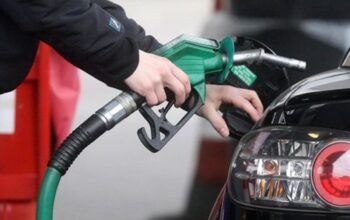
The price changes took effect at midnight Friday. Petrol now costs 321.17 rupees a liter, while high-speed diesel is 335.86 rupees. The adjustment reflects international benchmarks that have climbed sharply since the outbreak of broader conflict in the Middle East, including Iranian warnings about vessel passage through the Strait of Hormuz.
Sharif’s government is now attempting to balance the unavoidable reflection of global oil costs against domestic stability — combining immediate enforcement against profiteering, provincial coordination on conservation and a push for longer-term austerity measures — as the energy shock from the region continues to ripple through import-reliant economies.
Copyright © 2021 Independent Pakistan | All rights reserved