By Staff Reporter
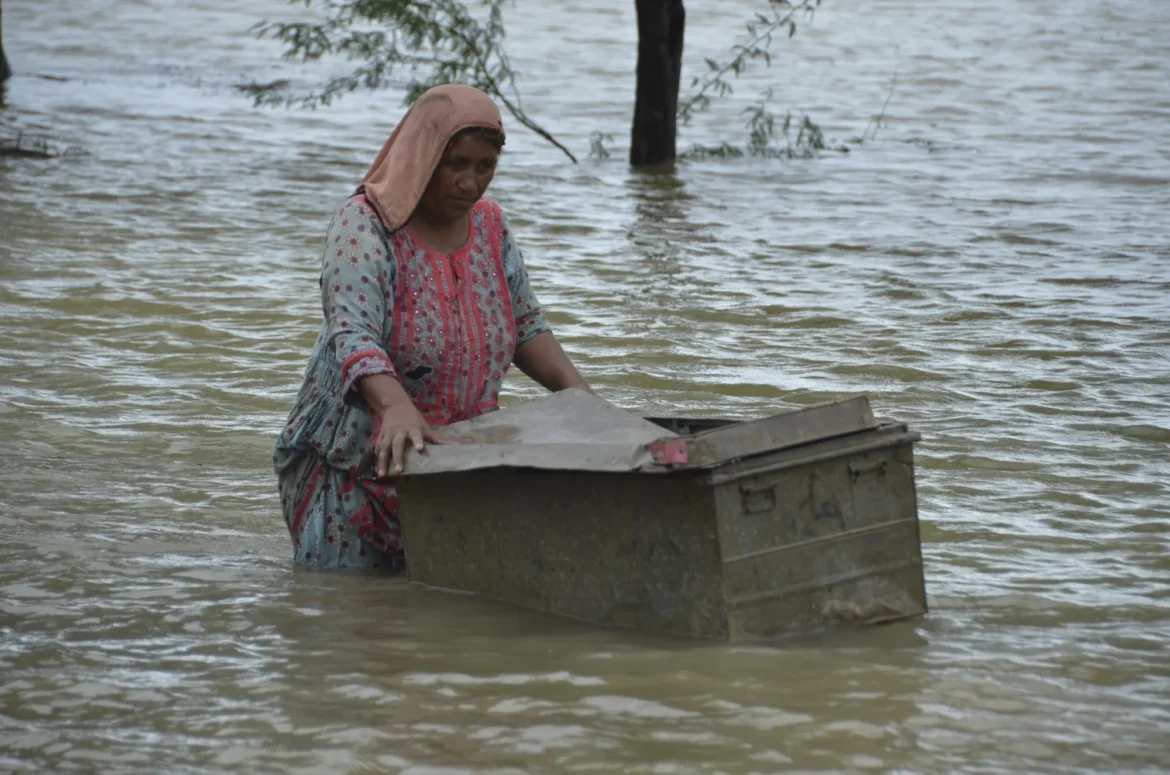
ISLAMABAD: Prime Minister Shehbaz Sharif has ordered the Finance Ministry to urgently negotiate a one-month electricity bill waiver with the International Monetary Fund for households battered by devastating floods that have killed hundreds, displaced millions, and ravaged crops across Punjab and Sindh.
Sharif’s directive, issued Friday, aims to ease the burden on communities facing what officials call Punjab’s worst flooding in history. The directive reflects the delicate balance of Pakistan’s economy, tethered to a $7 billion IMF bailout that demands strict fiscal discipline, including phasing out energy subsidies. A broad bill exemption, even for flood victims, risks breaching those terms by cutting utility revenues and swelling deficits, requiring the fund’s green light to avoid derailing the program.
“The finance ministry must now engage with the IMF to secure this relief,” Sharif said, stressing the need for immediate support for all affected areas, urban and rural, according to government sources.
The floods, fueled by relentless monsoon rains and overflowing rivers, have inundated low-lying areas, severed power and mobile networks, and isolated families from aid. In Punjab, the Chenab, Ravi, and Sutlej rivers have breached dikes, submerging villages and destroying hundreds of acres of farmland. In Sindh, the swollen Indus has flooded riverine communities in Dadu and Larkana, displacing thousands and sparking fears of waterborne disease outbreaks.
The Flood Forecasting Division warned of “very high” flood levels at Head Panjnad, Sidhnai, and Ganda Singh Wala, with “high” flows persisting at Head Sulemanki, Head Islam, and Mailsi Syphon. Data recorded at early Saturday showed 651,572 cusecs surging through Punjnad Headworks and 537,392 cusecs at Guddu Barrage in Sindh. To protect urban centers like Jalalpur and Alipur, authorities executed 19 controlled breaches along riverbanks on Friday, diverting floodwaters that nonetheless engulfed rural hamlets.
In Shujabad, near Multan, a collapsed dyke at Mouza Dhundwala flooded villages and threatened the city. Irrigation officials scrambled to reinforce the Bakhto Wah canal, but several settlements were already underwater.
Punjab Senior Minister Marriyum Aurangzeb, touring the disaster zone, ordered swift repairs at the Shujabad breach. The effort turned tragic when three workers were swept away; two were rescued, but the third is feared dead. In Alipur, officials breached Seetpur Road at 18 points to disperse floodwaters, submerging villages and trapping thousands on rooftops. A rescue boat capsized in Darabpur village after a man climbed aboard, but all passengers were saved.
Drones have become a lifeline in Seetpur, air-dropping food to those marooned on rooftops. “I had been without food and water for the last two days, and the drone delivery provided much-needed relief,” resident Malik Riaz told Dawn newspaper, noting that local hand pumps now yield only contaminated water.
Rescue operations have been relentless. Farooq Ahmad, a rescue spokesperson, said 18,130 people were saved in Jalalpur Pirwala, 11,700 in Liaqatpur, and 6,400 in Alipur. In the past 24 hours, Punjab teams evacuated 19,946 people, including 1,955 from Bahawalpur, 1,715 from Pakpattan, and 1,407 from Lodhran, among others.
In Sindh, the Indus overflow near Dadu-Moro Bridge has submerged over 30 villages, displacing thousands and fueling health crises. Medical camps, mobile ambulances, and rescue boats have been deployed, with Deputy Commissioner Syed Murtaza Ali Shah urging residents to cooperate with teams. “We are monitoring the situation closely,” he said.
Punjab Relief Commissioner Nabil Javaid called the crisis the “biggest flood in history,” reporting 97 deaths and 2.45 million people affected across 4,500 villages along the Ravi, Sutlej, and Chenab rivers. The Punjab Disaster Management Authority said 2,334 villages were hit by Chenab floods, 1,482 by the Ravi, and 672 by the Sutlej. Nearly 2.5 million people have been evacuated, with 1.91 million livestock moved to safety and 396 relief camps established.
The floods have sparked political friction. Pakistan Peoples Party Chairman Bilawal Bhutto Zardari welcomed the government’s climate and agricultural emergency declaration but criticized its delay in seeking United Nations aid. “Countries all over the world initiate this process within 72 hours. There is no excuse to cut off millions affected from this assistance,” he posted on X, citing precedents from 2005, 2010, and 2022.
He also faulted the government for not yet rolling out Benazir Income Support Program (BISP) relief, despite Sharif’s assurances. The PPP filed resolutions in the Senate and National Assembly, led by Senator Sherry Rehman and Shazia Marri, respectively, demanding urgent measures: electricity bill waivers, BISP cash transfers, medical aid to curb disease outbreaks, and an UN-led appeal. The party warned that delays risk a “nationwide food emergency” amid destroyed crops and rising food insecurity.
“This is not charity but Pakistan’s right,” the resolutions stated, noting the country’s outsized climate vulnerability despite minimal emissions.
Copyright © 2021 Independent Pakistan | All rights reserved