By Staff Reporter
ISLAMABAD: Imran Khan’s sons have said they have been left “more in the dark than we’ve ever been” over their father’s wellbeing, as the jailed former Pakistani prime minister marked three years in custody this week.
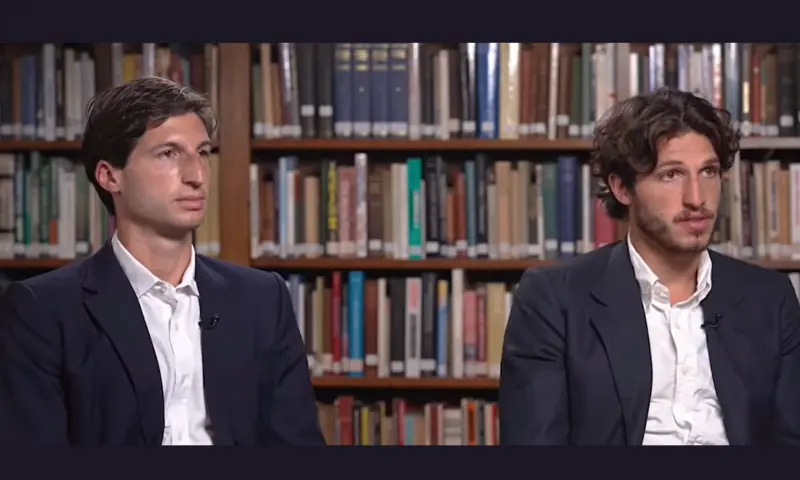
Kasim and Sulaiman Khan told CNN in an interview published on Thursday that neither they, nor their father’s doctors or lawyers, had been permitted to see him for seven months, deepening concern over the health of the 73-year-old former cricket star.
“No updates because his family, doctors [and] lawyers haven’t been allowed to see him for seven months,” Kasim said, adding that even the fortnightly phone calls ordered by the Islamabad High Court had failed to fill the silence. “Been more in the dark than we’ve ever been through his incarceration.”
Speaking to the broadcaster from London, where the brothers have lived since their parents’ marriage ended in 2004, the pair accused Pakistani authorities of quietly punishing them for speaking to the press, alleging that officials made it harder for them to travel to Pakistan whenever they raised their father’s case publicly, through delayed visas and administrative hold-ups.
“We’re trying, we’d like to go, but nothing’s coming through,” Kasim said. “There’s no reason we shouldn’t be accepted for a visa.”
Islamabad has previously insisted that Kasim and Sulaiman require no visa at all, since both hold National Identity Cards for Overseas Pakistanis, which allow visa-free entry. But the brothers say those cards have since lapsed, leaving them with no route into the country.
“So we’re not able to go by those, and the visa has never come; there were technical difficulties,” Kasim said.
Pakistan’s information ministry, in comments to CNN, dismissed the brothers’ account of being blocked as “misleading” and accused them of turning “an administrative process into an issue of political point-scoring.” The ministry did not address their specific claim that the identity cards had expired and were no longer valid for entry.
A father unlikely to bargain
Asked whether their father might eventually strike some form of deal with the government to secure his release, both brothers were sceptical. Sulaiman said Imran Khan would be unwilling to walk free while other party figures remained behind bars, unless “some kind of resolution” could be found for them too. Kasim gave a similar assessment, though he was more equivocal, saying only that it was “hard to say.”
He returned, though, to the question that has come to define the family’s public campaign: the state of his father’s health, and the refusal of officials to disclose it. “They’re refusing to show us any kind of health report,” Kasim said. “So his health may have deteriorated significantly since then.”
He described the corruption charges underpinning his father’s imprisonment as “plain lies and deceit,” and used the interview to appeal directly to the international community. Noting that Imran Khan had won the backing of most voters at the ballot box, Kasim said “anyone with the power to take action” ought to take notice of a man he described as being held “behind bars for no good reason.”
Three years, and counting
Imran Khan has been in custody since 5 August 2023, first detained over allegations he concealed the proceeds of state gifts received through the Toshakhana, the official repository for presents given to Pakistani leaders. He is now serving a 14-year sentence handed down in a separate corruption case involving roughly £190 million, and was convicted in a second Toshakhana case in December 2025, alongside his wife, Bushra Bibi, over the alleged unlawful retention of a Bulgari jewellery set gifted during an official visit to Saudi Arabia. He also faces outstanding terrorism charges linked to the riots that followed his brief arrest in May 2023.
The anniversary of his detention brought supporters of his Pakistan Tehreek-e-Insaf party onto the streets of major cities on Wednesday to demand his release. Rallies in Karachi and Lahore were met with a police response that included multiple arrests.
Despite a standing Islamabad High Court order requiring that Imran Khan be allowed visits from family and party representatives every Tuesday and Thursday, he has not received a visitor since his sister, Uzma Khanum, saw him in December. Rights groups have grown increasingly vocal about his isolation: Amnesty International said this week that he had been held in what it called unlawful solitary confinement, had gone more than eight months without seeing relatives, and had been denied regular access to legal counsel since December 2025. The organisation’s acting regional director for South Asia, Isabelle Lassee, said Pakistani authorities had “systematically denied” him a fair trial and called for his and his wife’s rights to family and legal access to be “unconditionally” restored.
Concern over his physical condition intensified in late January, when it emerged he had been diagnosed with right central retinal vein occlusion, an eye condition that can cause severe and sometimes permanent vision loss if left untreated. The government maintains he has since received treatment, though it has offered little detail on his current condition.
The episode has become the latest flashpoint in a bitter standoff between the government and Imran Khan’s family and party. His opponents accuse ministers of withholding proper medical care and shutting out his personal physicians; the government denies both charges. His sisters, along with opposition figures, have called for him to be moved to Shifa International Hospital in Islamabad, treated by doctors of his own choosing, and allowed contact with his family — demands that, for now, remain unmet.
Copyright © 2021 Independent Pakistan | All rights reserved