By Staff Reporter
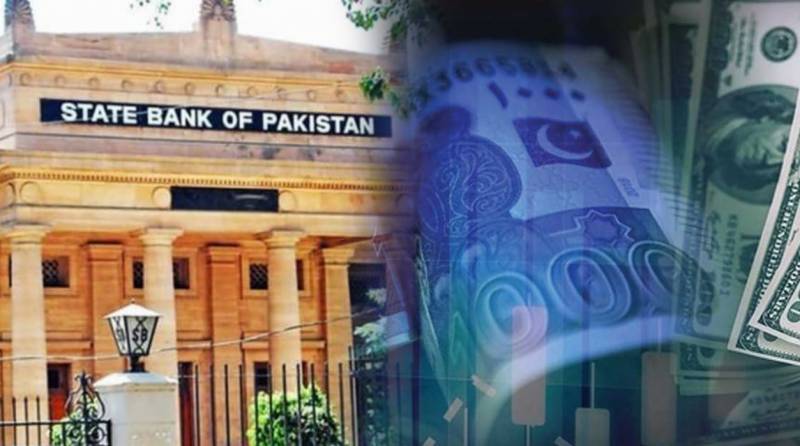
ISLAMABAD: Credit to the private sector has surged to a three-year high in the first five months of the current fiscal year, crossing Rs1 trillion for the first time in that period, according to data released by the State Bank of Pakistan.
But bankers cautioned that the influx was largely directed toward short-term working capital rather than long-term investments, underscoring the economy’s sluggish recovery amid low growth and high taxes.
The figures showed private sector credit off-take reaching Rs1.202 trillion from July 1 to Nov. 22 in fiscal year 2026, a sharp increase from just Rs41 billion in the comparable period of the previous year. This marks a significant escalation from recent trends: In fiscal year 2025, credit totalled Rs1,081 billion; in 2024, it was Rs513 billion; and in 2023, a mere Rs46 billion.
The slow growth in trade and industry has been a primary reason for the private sector’s poor creditworthiness, as data over the last two years suggested. Despite the apparent boost in lending, which could signal higher economic activity, bankers emphasised that most of the money flow was for short-term working capital needs, indicating it is not an investment for expansion.
The current lending is mainly for the rice crops for thrashing and other purposes, said bankers. Rice is one of the largest crops and has an international market of over 1 trillion rupees. In fiscal year 2024, rice exports were $3.692 billion (1.037 trillion rupees), and in 2025, $2.952 billion (829.5 billion rupees). The rice also has a very large domestic market.
Bankers said the higher borrowing for working capital was also due to low interest rates, as it reduced risk. The borrowing was not on a large scale in fiscal year 2025, despite the interest rate coming down, but has remained stuck at 11 percent since May 2025.
Despite large flows of credit, the investment would remain awaiting liquidity, as noted over the last three years. Pakistan’s investment-to-G.D.P. ratio for fiscal year 2024 was 13.1 percent, the lowest in over 50 years. This was a significant decline from 14.13 percent in fiscal year 2023. Pakistan’s investment-to-G.D.P. ratio for fiscal year 2025 was 13.6 percent, an improvement from the previous year but still lower than fiscal year 2023.
Both bankers and analysts believe this is the worst situation for an economy crippling by a slow pace of around 2 to 2.6 percent. The GDP growth was later revised to 3 percent from 2.6 percent for fiscal year 2025.
The government has been calling for investments, asking domestic investors to come forward, but at the same time, industries and business houses have been crying out against heavy taxes up to 60 percent, including the super tax.
The government has yet to announce any incentives to promote investment in the country, despite knowing the worst kind of unemployment and increasing poverty. The government has also failed to attract foreign investment, as the country appears surrounded by war-like situations in its two provinces and with two neighbouring countries, experts said.
The State Bank’s data release comes as Pakistan grapples with broader economic challenges, including persistent inflation and fiscal deficits, which have deterred both local and international capital. While the credit surge offers a glimmer of liquidity in key sectors like agriculture, it highlights the disconnect between short-term financing and the structural reforms needed to spur sustainable growth.
Economists have long argued that without addressing barriers like taxation and regional instability, Pakistan’s economy risks remaining trapped in a cycle of low investment and modest expansion.
Copyright © 2021 Independent Pakistan | All rights reserved