By Staff Reporter
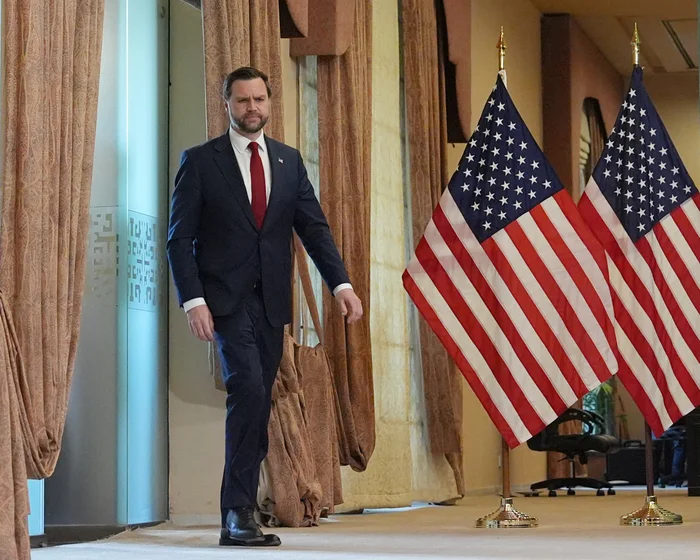
The marathon negotiations in Islamabad ended much as they began: with both sides talking past each other across a chasm of mistrust that four decades of estrangement had only widened. After 21 hours of direct, face-to-face talks — the highest-level contact between American and Iranian officials since the 1979 Islamic Revolution — Vice President JD Vance stepped to the microphone in Pakistan’s capital and delivered a verdict that was polite in tone but blunt in substance. Iran had rejected Washington’s “final and best offer.” Tehran, for its part, accused the United States of making “excessive demands” and “unreasonable” requests on everything from the Strait of Hormuz to its nuclear program. No agreement was reached. No date was set for the next round. The two-week ceasefire that Pakistan had brokered on April 8 now hangs by a thread.
This was not the outcome anyone who understands the stakes should have expected. It was, however, the one that history and hardened positions made almost inevitable. The war that began on Feb. 28 with coordinated American and Israeli strikes on Iranian military and nuclear sites — strikes that killed Supreme Leader Ayatollah Ali Khamenei and others, and that Iran answered with missile barrages, attacks on American bases and a blockade of the Strait of Hormuz — had already exacted a terrible price. Thousands dead, global energy markets roiled, shipping lanes choked, economies derailed. The Islamabad talks were meant to be the off-ramp. Instead, they became another marker of how difficult it is for Washington and Tehran to find common ground even when both claim to want one.
What makes the failure particularly sobering is how much was actually on the table. The delegations were not junior diplomats trading talking points. The American side was led by the vice president himself, accompanied by special envoy Steve Witkoff and Jared Kushner, President Trump’s son-in-law and senior adviser. The Iranian delegation was equally heavyweight: Parliament Speaker Mohammad Baqer Qalibaf and Foreign Minister Abbas Araqchi, backed by senior officials from the Supreme National Defence Council and the central bank. They met not in proximity talks but across the table, after an initial round of expert-level shuttling by Pakistani mediators. Three more rounds of committee work followed — economic, military, legal, nuclear — with written texts exchanged after each. That level of engagement does not happen by accident. It signals seriousness, even if the outcome was disappointment.
The core impasse was never a surprise. At its heart lay two irreconcilable demands. The United States insisted on a “fundamental commitment” from Iran — not merely that it would refrain from rebuilding its destroyed enrichment facilities, but that it would never pursue a nuclear weapon, nor the tools to achieve one quickly, “not just now, not just two years from now, but for the long term.” Iran, for its part, viewed any such pledge as an unacceptable surrender of its sovereign rights under the Nuclear Non-Proliferation Treaty. It entered the talks having already accepted, in principle, Washington’s 10-point framework, but it arrived dressed in mourning for its fallen leader and carrying the shoes and schoolbags of students killed in an American strike on a facility adjacent to a military compound — a grim reminder, Iranian officials made clear, of what “negotiating with the Americans” has historically meant.
The Strait of Hormuz proved an equally intractable flashpoint. Through it passes one-fifth of the world’s oil and gas. Iran has long seen control of the waterway as its strongest leverage, and it has no intention of relinquishing it without extracting maximum concessions. Tehran wants formal authority over navigation, the right to collect transit fees and an end to what it calls American interference in a zone it considers its maritime backyard. Washington, by contrast, demands unimpeded passage for global shipping — a position President Trump himself has articulated in contradictory ways in the space of days. One moment the strait was “of no interest whatsoever” to the United States; the next it was central to any deal. Such inconsistency does not inspire confidence on the other side of the table. While the talks were underway, two American guided-missile destroyers transited the strait — a deliberate show of force that Iranian state media immediately denounced. The message was unmistakable: leverage cuts both ways.
Yet it would be a mistake to reduce the collapse to a simple clash of maximalism. Deeper forces were at work. On the American side, the administration’s public posture suggested a curious detachment. President Trump, as the negotiations stretched into the early hours of Sunday in Islamabad, was attending a UFC match in Miami. He had already declared victory on the battlefield — “Whether we make a deal or not makes no difference to me; we’ve already won” — and showed little sign of monitoring the talks with urgency. Vance insisted he had spoken with the president “half a dozen times, a dozen times” over the 21 hours, but the optics were hard to ignore. On the Iranian side, scepticism ran bone deep. As one Iranian analyst put it, Tehran participated out of respect for Pakistan rather than trust in Washington. Its officials spoke of “national interests” that “hundreds of military personnel have sacrificed their lives to protect.” Factionalism inside Iran, they insisted, was irrelevant; the red lines were collective.
The danger now is obvious. The ceasefire is fragile. Ship traffic through the Strait of Hormuz remains a fraction of prewar levels. Violence in Lebanon continues unabated, with Israel insisting that its operations against Hezbollah — an Iranian proxy — fall outside the truce. Oil prices, already volatile, could spike again if hostilities resume. And the broader Middle East, still reeling from the war’s human and economic toll, can ill afford another round of escalation.
But it would be equally shortsighted to declare the Islamabad round a total failure. The very fact that the talks occurred at all — in the same room, with the same delegations, under the mediation of a country that only a year ago was treated as a diplomatic pariah in Washington — is remarkable. Pakistan’s role cannot be overstated. Prime Minister Shehbaz Sharif and Field Marshal Asim Munir, the army chief, did not merely host; they facilitated, shuttled, cajoled and kept both sides at the table through mood swings and rising temperatures. Pakistani officials described the atmosphere as fluctuating; one source called it “up and down.” But the channel they opened has not been closed. Vance praised them effusively. Iranian officials expressed gratitude. Even after the talks ended without agreement, both sides spoke of technical experts exchanging documents and “negotiations will continue despite some remaining differences.” Iran’s government posted on X that the path forward depends on Washington dropping “unreasonable demands.” The ball, Tehran says, remains in America’s court. It is in no hurry.
That last phrase is telling. Iran believes time is on its side. The United States, having declared victory, may be tempted to walk away. But history suggests neither side can afford complacency. The nuclear issue has not been solved; it has merely been paused by destruction. Iran’s regional influence, though battered, has not vanished. And the economic pain inflicted on both nations — and on the world — will only grow if the ceasefire collapses.
The way forward, if there is one, lies in realism rather than rhetoric. Washington must decide what it truly wants: a verifiable, long-term Iranian commitment on nuclear weapons, yes, but also consistency on the Strait of Hormuz and a recognition that sanctions relief and asset releases cannot be treated as optional sweeteners. Tehran must accept that its “legitimate rights” do not include the ability to threaten global energy flows or rebuild a nuclear program in secret. Both sides will have to swallow hard choices on Lebanon and regional proxies. And Pakistan — improbably, but effectively — must remain in the middle, keeping the door ajar even when the principals seem ready to slam it.
Diplomacy is rarely linear, and it is never easy between adversaries who have spent decades viewing each other as existential threats or at least potential threats. The Islamabad talks did not produce a breakthrough. They did, however, produce something rarer: a direct channel, substantive discussion and a proposal left on the table. That is not victory, but it is not nothing. In a region still bleeding from the last war, it may be the only thread worth pulling. The alternative — letting the ceasefire expire, the strait remain contested, and the nuclear question fester — is too dangerous to contemplate.
Copyright © 2021 Independent Pakistan | All rights reserved