By Staff Reporter
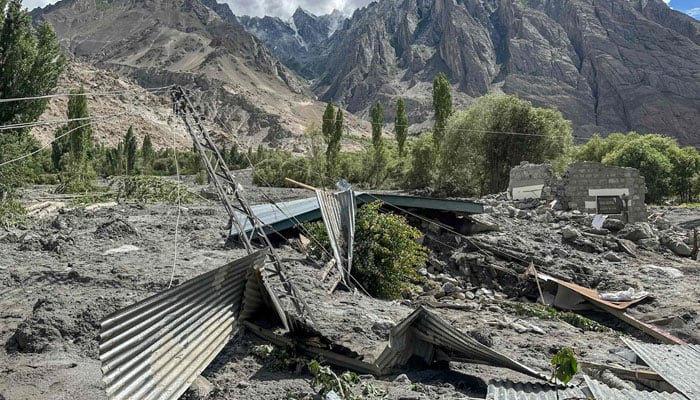
PESHAWAR: The death toll from Pakistan’s monsoon season rose to 47 on Monday after six more people were killed in a single 24-hour span in the country’s northwestern Khyber Pakhtunkhwa province, where flash floods and collapsing homes have claimed dozens of lives since the rains began in late June.
Provincial disaster officials said the latest victims — three men and three children — died when heavy rains triggered flash flooding and brought down the roofs and walls of houses across four districts: Khyber, Mardan, Mansehra, and Kurram. A woman and a child were also injured, according to the Khyber Pakhtunkhwa Provincial Disaster Management Authority, which issued a public appeal Monday urging residents to steer clear of popular tourist destinations in the region.
The province now accounts for 29 of the 47 monsoon-related deaths recorded nationwide since the season began in late June, according to a situation report from Pakistan’s National Disaster Management Authority.
“PDMA has directed the district administrations to intensify relief activities and provide immediate assistance to the affected people,” the provincial authority said in a statement Monday, without elaborating on what form that assistance would take.
The warning against nonessential travel comes after the disaster authority forecast last week that the region would see strong winds, thunderstorms, and heavy rainfall from July 19 through July 23 — a forecast that appears to be bearing out. Officials had urged emergency services to remain on high alert and to preposition rescue teams, relief supplies, and machinery in vulnerable areas ahead of the storms.
A Familiar, Deadly Pattern
The scenes playing out in Khyber Pakhtunkhwa this week are part of a grim seasonal rhythm that has intensified in recent years. Pakistan has endured increasingly severe monsoon rains across Khyber Pakhtunkhwa, Punjab, and Sindh provinces, with last year’s floods killing more than 1,000 people and forcing the evacuation of millions across Punjab and Sindh alone.
Climate scientists and Pakistani officials alike have pointed to the country’s acute vulnerability to climate change as a driver of the escalating toll. Musadik Malik, the country’s climate change minister, said in May that the nation’s last four major floods have killed more than 6,000 people combined and left roughly 20,000 others injured or permanently disabled.
Eyes Turn North, Toward the Glaciers
Even as Khyber Pakhtunkhwa absorbed this week’s losses, national disaster officials were looking further north, where a different kind of flood risk looms.
Lt. Gen. Inam Haider Malik, chairman of the National Disaster Management Authority, traveled Sunday to Gilgit-Baltistan, the mountainous northern region that is home to some of the world’s largest concentrations of glaciers outside the polar regions, to review the area’s readiness for the season. State broadcaster Radio Pakistan reported that Malik examined district-by-district preparedness, early warning systems, rescue and relief capacity, evacuation plans, and coordination mechanisms for the flooding threats specific to the region: flash floods, glacial lake outburst floods, landslides, and riverine flooding in vulnerable valleys.
“The chairman emphasized timely implementation of contingency plans, prepositioning of relief stocks and strengthening of community awareness in high-risk areas,” Radio Pakistan reported, adding that Malik directed the region’s disaster management authority to ensure close coordination with local district administrations and other stakeholders.
The visit followed a July 11 warning from the Pakistan Meteorological Department that a fresh westerly weather system was expected to bring heavy rain and thunderstorms to both Gilgit-Baltistan and Khyber Pakhtunkhwa this month, raising the risk of glacial lake outburst floods — a phenomenon in which rising temperatures and rainfall cause swollen glacial lakes to breach and send torrents of water downstream with little warning.
Gilgit-Baltistan’s vulnerability to these floods has become an annual concern. As temperatures climb each summer and monsoon rains arrive, the region’s glacial lakes swell, and disaster officials have grown accustomed to warning that the combination can trigger sudden, destructive flooding in valleys below. Malik pledged the national authority’s continued support to regional officials in building resilience against the range of hazards tied to the changing climate, including avalanches, storms, and rain-triggered landslides.
Punjab Braces as Rivers Rise
In eastern Punjab province, disaster officials warned Saturday that water levels in the Jhelum, Chenab, and Ravi rivers could rise substantially between July 20 and July 24 as a result of heavy monsoon rainfall — a warning that suggests the country’s disaster response apparatus will remain stretched across multiple fronts in the days ahead.
Taken together, the developments underscore the scale of the challenge facing Pakistani authorities this monsoon season: a death toll climbing by the day in the northwest, a glacial flood risk building in the north, and rising rivers threatening a third province to the east, all unfolding in a country that experts consistently rank among those most exposed to the effects of a changing climate.
Copyright © 2021 Independent Pakistan | All rights reserved