By Staff Reporter
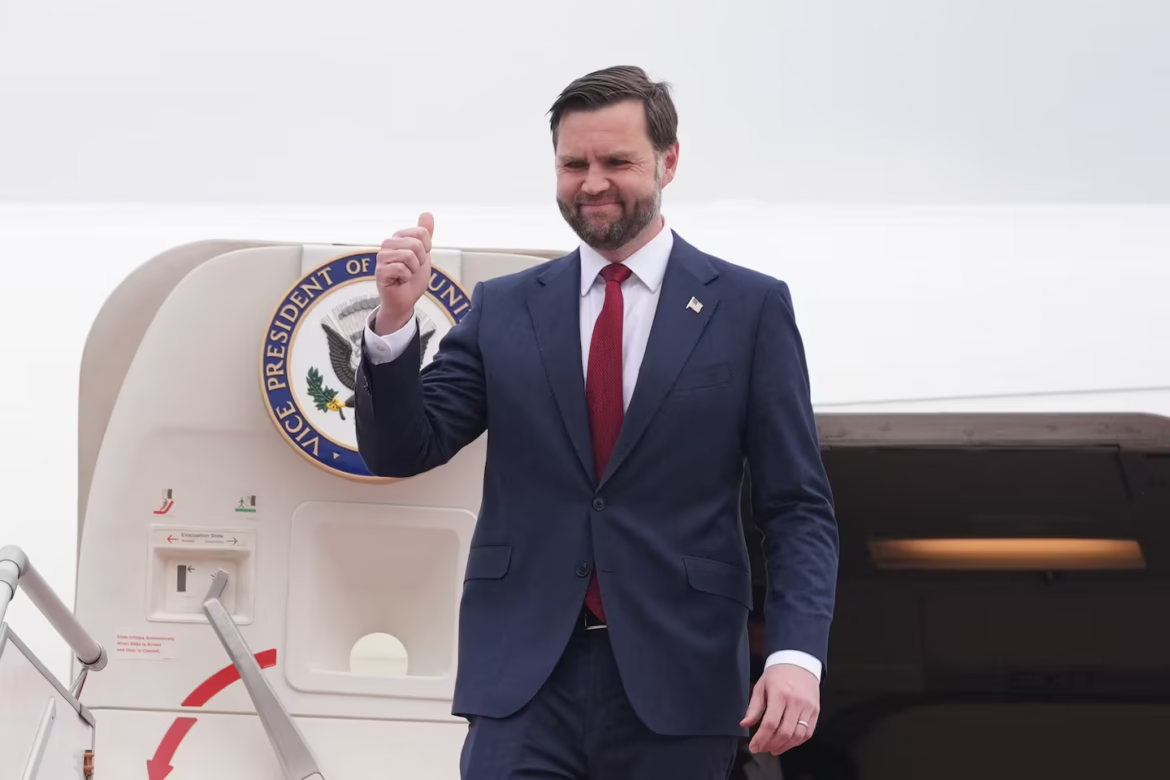
Pakistan’s capital has become an improbable pivot point in a war that was never supposed to last this long. Less than a week after the first face-to-face negotiations between the United States and Iran in more than 40 years collapsed in Islamabad, President Trump is signalling that a second round could begin “over the next two days.” He has even urged a New York Post reporter to stay put in Pakistan because “something could be happening.” Vice President JD Vance, who led the American side in last weekend’s 21-hour marathon, has described the Iranian negotiators as eager for a deal despite the deep mistrust. Pakistani officials, from Prime Minister Shehbaz Sharif to the powerful army chief Field Marshal Asim Munir, are racing to make it happen—Sharif leaves Wednesday for Saudi Arabia, Qatar and Turkey to line up regional backing before the fragile two-week ceasefire expires next week.
In all likelihood, it is the raw, messy recognition that both sides have reached the limit of what force can achieve. The war that began with American and Israeli strikes at the end of February has already killed thousands, roiled global energy markets and exposed the limits of blockade-as-strategy. Iran has kept the Strait of Hormuz largely closed; the United States responded with a naval lockdown of Iranian ports. Even in the first 24 to 36 hours of that blockade, enforcement proved inconsistent. Iran-linked vessels slipped through. Some tankers turned around only to reverse course again. Oil prices spiked above $100 a barrel, then eased on nothing more than the rumour of renewed diplomacy. The International Energy Agency and independent analysts have been blunt: Iran cannot replicate its 1.68 million barrels a day of seaborne exports by trucking or piping oil to neighbours. Its economy is staring at collapse. And the United States cannot sustain a global energy choke point indefinitely without paying its own political and economic price.
The core impasse remains unchanged and dangerous. Both sides have floated suspensions of Iranian uranium enrichment, yet they cannot agree on how long. Washington wants a 20-year halt and the dismantling of major facilities, plus the full removal of Tehran’s stockpile of near-weapons-grade material. Iran has countered with five years or less, insisting it will never permanently surrender its rights under the Nuclear Nonproliferation Treaty. Add the demand for immediate reopening of the Strait of Hormuz, sanctions relief, and, according to Iranian officials, discussion of war reparations, and the gaps look unbridgeable—until they suddenly don’t. Vance has acknowledged the decades of suspicion but also noted real movement in Islamabad. “You are not going to solve that problem overnight,” he said, and he left the door open. Iranian officials also hope the coming round could happen as early as the end of this week or early next. Nothing is finalised, but the delegations are keeping Friday through Sunday open.
The danger is obvious. The ceasefire is paper-thin. Israel continues operations in Lebanon against Hezbollah, with fresh direct talks between Israeli and Lebanese ambassadors in Washington on Tuesday described as “productive” but producing no immediate truce. Hezbollah itself has rejected any deal negotiated over its head. A single naval clash in the Gulf of Oman, a resumption of strikes on Iranian facilities, or an Israeli escalation in Beirut could shred the pause before diplomats even sit down again.
The hope, slender but real, lies in the very fact that talks are being discussed at all. Pakistan has emerged as the unlikely honest broker. Its army chief has earned public praise from Trump as “fantastic.” Back channels are humming. The United Nations secretary general called renewed negotiations “highly probable.” Even Trump, who has declared the war “very close to over” multiple times, now frames the next meeting as part of a “Trumpian grand bargain” rather than a small tactical fix. The weekend session in Islamabad may have failed, but it broke a 40-year taboo. Iranian Parliamentary Speaker Mohammad Baqer Qalibaf and Vance sat across from each other. Technical experts stayed late into the night. That precedent matters.
The way forward is not glamorous. It is incremental, verifiable and politically painful for both capitals. The United States would need to accept that a permanent, immediate ban on enrichment is a non-starter; a verifiable, multi-year suspension tied to sanctions relief and strict monitoring of the highly enriched uranium stockpile is the realistic middle ground. Iran must demonstrate restraint with its proxies, beginning with Hezbollah, and accept that any reopening of the strait comes with international oversight. The Europeans, Gulf states and even China and Russia could be brought in to guarantee compliance—turning a bilateral knife-fight into a multilateral framework that neither side can easily walk away from.
Maximalism has already been tried. The first round in Islamabad collapsed over exactly these issues. The blockade that followed was meant to concentrate minds; instead, it has concentrated pain—on global markets, on Iranian civilians, on American credibility. If the coming days in Pakistan produce nothing more than another inconclusive session, the ceasefire will almost certainly collapse, the blockade will harden, and the region will slide back into open conflict with consequences far beyond the Gulf. That is why the sudden flicker of possible talks is the story right now. Not because diplomacy is guaranteed to succeed, but because the alternative has already failed. The war began with predictions of swift victory. It has delivered attrition, economic shock and a reminder that geography—specifically a narrow strait between Iran and Oman—still dictates terms to superpowers. The diplomats gathering again in Islamabad, or wherever the next round lands, carry more than the fate of two governments. They carry the narrow chance that this conflict ends at the table rather than in the water.
Copyright © 2021 Independent Pakistan | All rights reserved