By Staff Reporter
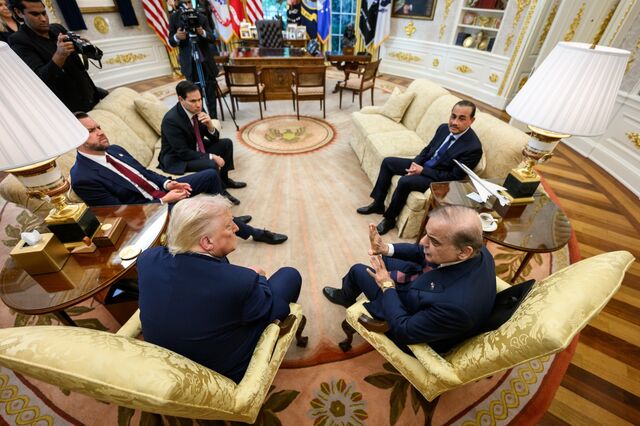
The latest twist in the two-month-old war between the United States and Iran arrived, as so many have lately, via a late-night Truth Social post from President Donald Trump. On Tuesday, with the two-week ceasefire on the brink of expiration, Trump announced he was extending it indefinitely — or at least until Tehran submits a “unified proposal” and talks run their course. The decision, he said, came at the direct request of Pakistan’s Prime Minister Shehbaz Sharif and army chief Field Marshal Asim Munir. It followed hours of frantic deliberations in the White House, where Air Force Two sat fueled and ready to carry Vice President JD Vance to Islamabad for what was supposed to be the next round of mediated negotiations.
This was not the outcome Trump had signalled only hours earlier. In a CNBC interview that morning, he had dismissed any notion of prolonging the truce, insisting time was short and warning that the US military was “raring to go.” The reversal — the second such about-face in as many weeks — captures the bewildering rhythm of American policy toward Iran right now: threats issued, then walked back; deadlines imposed, then ignored; maximalist demands floated in public while private channels grope for compromise. The result is not merely confusion in Tehran. It is a self-inflicted paralysis that risks turning a contained conflict into something far more destructive.
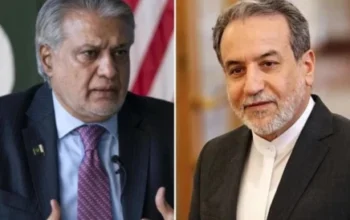
At the heart of the impasse lies the Strait of Hormuz. The US naval blockade remains firmly in place, choking Iran’s ports and, by extension, a fifth of the world’s oil supply. Iranian officials, from Foreign Minister Abbas Araghchi to parliament speaker Mohammad Bagher Ghalibaf, have denounced it as an “act of war” and a blatant violation of the April 8 ceasefire. They are not wrong on the law or the optics. Tehran has responded in kind, tightening its own grip on the waterway, seizing or harassing vessels, and reminding Washington that it knows how to “neutralise restrictions.” The economic fallout has been swift and global: fuel shortages, spiking airline tickets, pinched consumers at the gas pump, and what the head of the International Energy Agency, Fatih Birol, called the biggest energy crisis in history when layered atop Russia’s war in Ukraine.
But Trump has shown no willingness to lift the blockade without a comprehensive deal on American terms. Those terms are sweeping: the complete dismantling of Iran’s nuclear program, limits on missile production, and curbs on support for regional allies, including Hezbollah and Hamas. Iran, for its part, insists on its sovereign right to enrich uranium for civilian purposes, refuses to treat its military capabilities or proxy relationships as bargaining chips, and has rejected any notion of surrendering its existing stockpiles of highly enriched uranium. The gaps are not narrow. They are foundational. Into this breach stepped Pakistan, whose role as mediator has been both indispensable and thankless. Sharif’s public expression of gratitude to Trump for the extension, coupled with his pledge to keep pushing for a “comprehensive Peace Deal” in Islamabad, reflects Islamabad’s genuine stake in de-escalation. A wider war would send refugees and instability across its border; a prolonged blockade would further roil energy markets on which Pakistan itself depends. Field Marshal Munir’s quiet diplomacy appears to have bought the breathing room. But mediation without leverage has its limits. Pakistan can shuttle messages and urge restraint. It cannot force Tehran to the table if Tehran believes the table is set only for surrender.
And that is precisely how many in Iran see it. Chief negotiator Ghalibaf warned that the United States seeks to turn any negotiating table “into a table of surrender or to justify renewed warmongering.” Iran’s ambassador to Pakistan invoked Jane Austen with biting precision: a country possessed of a large civilisation will not negotiate under threat and force. The Iranian foreign ministry spokesperson, Esmail Baghaei, cited “contradictory messages, contradictory behaviours, and unacceptable actions” from Washington as the reason no final decision had been made on attending talks. Tehran’s ambassador to the United Nations went further, labelling the US seizure of an Iranian vessel in the Gulf of Oman an act of “piracy” and demanding accountability.
Trump’s public commentary has only deepened the distrust. In one 24-hour stretch, as an Iranian diplomatic post in Ghana wryly catalogued, the president thanked Iran for closing the strait, threatened Iran, blamed China, praised China, declared the blockade a success, confirmed Iran had restocked through it, promised a deal, and promised bombs would fall. Iranian officials have taken to calling him a “one-man WhatsApp chat group.” Deputy Foreign Minister Saeed Khatibzadeh’s dry verdict — “He talks too much” — was less an insult than a statement of diplomatic fact. Tehran cannot ignore the barrage, even when Iranian diplomats insist they will not respond to every social media provocation. The noise makes it nearly impossible for Iran’s leadership to sell any compromise at home.
Here the American narrative of a “seriously fractured” Iranian government collides with reality on the ground. Trump has repeatedly pointed to internal divisions in Tehran, suggesting they explain the delay in producing a unified proposal. But media groups reporting from Tehran paint a different picture. The assassination of Supreme Leader Ali Khamenei has not produced the defections or chaos Washington apparently expected. Mojtaba Khamenei, his son and successor, has yet to appear publicly, but the circle around him has been working together for 15 years. The Islamic Revolutionary Guard Corps continues to spearhead the war effort with evident cohesion. What Trump calls a fracture may simply be the deliberate pace of a regime determined not to appear desperate. That determination is reinforced by domestic politics on both sides. Trump must manage a MAGA base sceptical of endless foreign entanglements and a stock market rattled by energy prices. Iran’s leadership must project strength to a population that has endured sanctions, strikes, and the loss of senior figures. Neither side can afford to look weak. The result is a dangerous symmetry: Trump’s bombast meets Iran’s defiance, and the blockade persists.
Analysts have begun to voice the obvious. Barbara Slavin of the Stimson Center described the extension as a way for Trump to “cover the embarrassment” of floundering negotiations. Iran has discovered leverage in its control of the strait; the United States has not found a way to translate military superiority into a diplomatic breakthrough. Brian Katulis of the Middle East Institute noted that while the move may reflect pragmatic recognition of Iranian fractures, it also deepens uncertainty about how long the war can drag on without inflicting further economic and political pain on the American president himself. Former ambassador James Jeffrey put it more bluntly: there is no clear formula for ending wars of this kind. The risks are real and compounding. A naval blockade that is neither lifted nor decisive risks becoming a slow-motion provocation. Iran’s warnings of “new cards on the battlefield” — whether unearthed missile systems or further disruptions in the strait — cannot be dismissed. The longer the economic haemorrhage continues, the greater the chance that miscalculation in the Gulf spirals into direct confrontation. Global leaders from Keir Starmer and Emmanuel Macron to Xi Jinping have signalled their alarm. European nations are widening sanctions and preparing defensive missions to protect shipping once a sustainable ceasefire takes hold. But none of that substitutes for the bilateral breakthrough that remains elusive.
And yet there is, in the very fact of the extension, a sliver of hope. Trump’s decision not to set a new hard deadline suggests recognition that deadlines have so far produced only more deadlines. Both sides, for all their public posturing, understand the mutual pain: Iran’s economy is battered, America’s consumers are feeling the pinch, and the global energy system is groaning. Pakistani officials scrambled on Tuesday to keep both parties talking precisely because they see that shared incentive. The US negotiating team — led by Vance and including Steve Witkoff and Jared Kushner — had prepared detailed points on uranium enrichment, stockpiles, and sanctions relief. Iran’s silence was not necessarily rejection; it may have been the time required for Mojtaba Khamenei’s inner circle to align.
The path forward is narrow but not nonexistent. Washington must decide whether its maximalist demands are worth the risk of indefinite blockade or resumed bombing. Tehran must decide whether principled resistance serves its long-term interests if the strait remains closed and its people suffer. A gesture from the United States — perhaps a calibrated easing of the blockade in exchange for verifiable Iranian restraint in the waterway — could break the psychological logjam. Iran, in turn, could signal seriousness by clarifying its bottom lines on enrichment without preconditions. Pakistan’s good offices remain the only credible channel; both capitals should use them.
History offers no guarantees. Wars begun in haste have a way of outlasting the calculations that launched them. Two months into this one, the United States and Iran find themselves locked in a contest of wills that neither can afford to lose and neither, so far, knows how to win. The ceasefire extension is not victory for diplomacy; it is merely a postponement of reckoning. Whether that postponement becomes the foundation for a durable peace or simply the prelude to wider catastrophe will depend on whether the two sides can finally lower the volume, lift their eyes from domestic audiences, and recognise that the real enemy is not each other’s rhetoric but the gathering costs of continued stalemate. The clock is not ticking toward a deadline. It is ticking toward consequences.
Copyright © 2021 Independent Pakistan | All rights reserved