By Staff Reporter
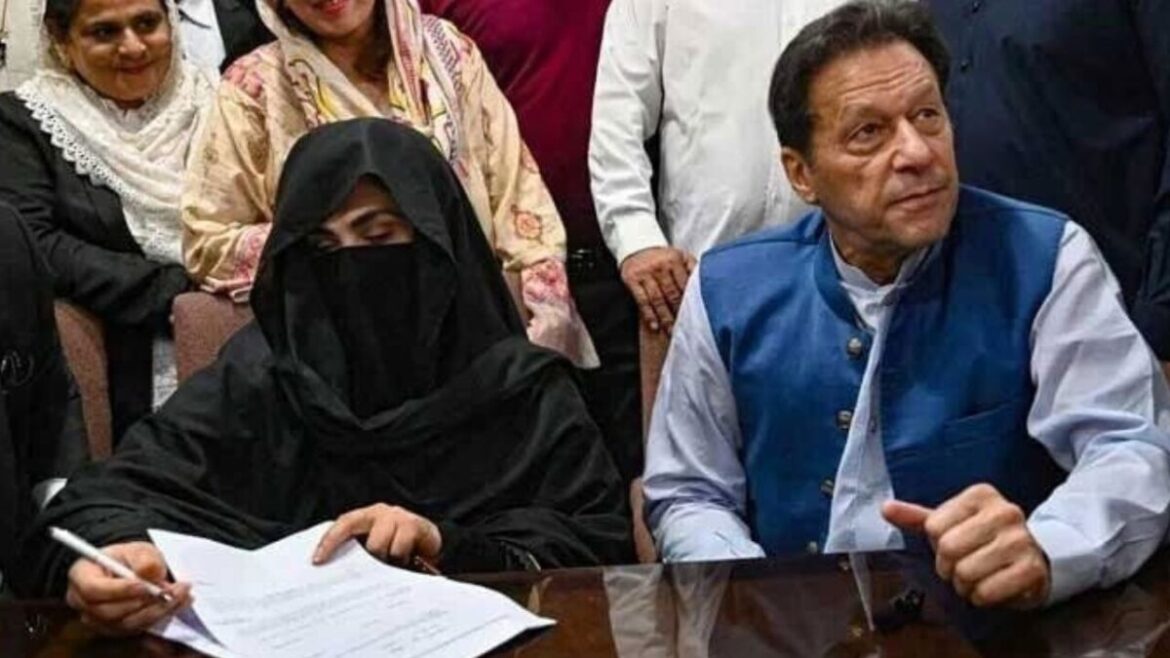
ISLAMABAD: The Islamabad High Court on Wednesday imposed a 100,000-rupee fine on the National Accountability Bureau, sharply rebuking the country’s premier anti-corruption agency for what the bench described as “delaying tactics” in the long-running £190 million Al-Qadir Trust corruption case against former prime minister Imran Khan and his wife, Bushra Bibi.
The penalty came as a two-judge division bench — led by Chief Justice Sardar Muhammad Sarfraz Dogar and including Justice Muhammad Asif — heard pleas from the couple seeking suspension of their sentences and the admission of their appeals against conviction. The proceedings unfolded against a backdrop of mounting frustration over procedural delays that have kept the high-profile appeals in limbo for more than a year.
In a written response filed just before the hearing, NAB mounted a preliminary objection to the court’s jurisdiction, arguing that the defence application under Section 426 of the Criminal Procedure Code was premature. The bureau contended that the couple’s appeals had not yet been formally admitted for regular hearing, and therefore the high court’s power to suspend sentences had not been triggered. Citing established legal precedents, NAB insisted that the phrase “pending appeal” in the code refers only to cases that have crossed the threshold of formal admission.
What followed was a tense courtroom clash that exposed deep fissures in the pace of justice. Khan’s counsel, Barrister Aitzaz Ahsan, opened by cataloguing what he called systematic obstruction of the former premier’s right to legal representation. Ahsan told the court he had been unable to secure a power of attorney from his client for four months because prison authorities at Adiala jail had effectively barred access — a situation he described as a flagrant breach of constitutional guarantees. “It is a fundamental right of an accused to have unimpeded access to legal counsel,” Ahsan argued, demanding that the court take action against the jail administration.
In a broader indictment of Pakistan’s accountability system, Ahsan drew a pointed comparison to the recent conviction of former Inter-Services Intelligence chief Faiz Hameed by a military tribunal. “Accountability will not be proven with the conviction of Faiz Hameed,” he said. “True accountability will only be seen if those army officers who usurped the rights of civilians are also dealt with in accordance with the law.”
His colleague, Barrister Salman Safdar called it “unfortunate” that the appeals against conviction had been listed for hearing only after a gap of 14 months. Safdar also reminded the bench of a precedent set by Chief Justice Dogar himself, noting that the judge had once granted relief to a condemned prisoner suffering from an eye infection — an observation widely understood as a reference to Khan’s own reported ocular ailment.
NAB prosecutor Muhammad Rafay pushed back, insisting the application to suspend the sentences was not maintainable until the court first decided the admissibility of the main appeals. He urged the bench to resolve that threshold question before proceeding further. The argument faltered, however, when the court pressed him on the conspicuous absence of NAB’s special prosecutor.
Rafay explained that the senior prosecutor was occupied with “religious rituals,” a response that visibly irritated the bench. Chief Justice Dogar noted that the Supreme Court had already taken cognizance of Khan’s health concerns, rendering the matter sub judice before the apex court. Frustrated by what it viewed as repeated stalling, the bench imposed the 100,000-rupee fine on NAB and issued formal notice on the bureau’s maintainability application.
Defence lawyers, including Safdar, pressed for an expedited resolution, asking the court to decide the suspension plea before the upcoming Eid holidays. At the close of the hearing, the bench adjourned proceedings and directed NAB to appear fully prepared on the next date, with the defence signalling its determination to push for swift adjudication. The appeals have been plagued by procedural obstacles since they were filed. The IHC registrar’s office had earlier raised technical objections — including unsigned pages and the lack of a certificate confirming the matter was not pending elsewhere. Those issues were finally cleared on Feb. 26 after defence lawyers urged an early hearing, citing Khan’s eye condition.
The March 11 date was set only after that intervention.The underlying case dates to Jan. 17, 2025, when an accountability court in Islamabad sentenced Khan to 14 years in prison and Bibi to seven years in the £190 million Al-Qadir Trust matter. The convictions have remained under challenge, but the couple’s legal battle has been repeatedly slowed by objections, scheduling disputes and questions over court jurisdiction — turning what should have been a straightforward appellate process into a protracted test of Pakistan’s judicial machinery.
Copyright © 2021 Independent Pakistan | All rights reserved