By Staff Reporter
ISLAMABAD: The government has decided in principle to begin revising petroleum prices on a weekly basis from 8 March and to activate sweeping fuel conservation measures, including widespread work-from-home arrangements and distance learning, as the war in the Middle East raises the prospect of serious oil supply disruptions.
The contingency plan was drawn up on Thursday by a special cabinet committee established by Prime Minister Shehbaz Sharif, after detailed consultations with all provincial governments. It is due to be presented to Sharif on Friday morning, and, subject to his approval, will be rushed through the federal cabinet’s Economic Coordination Committee later the same day for formal sign-off and immediate implementation.
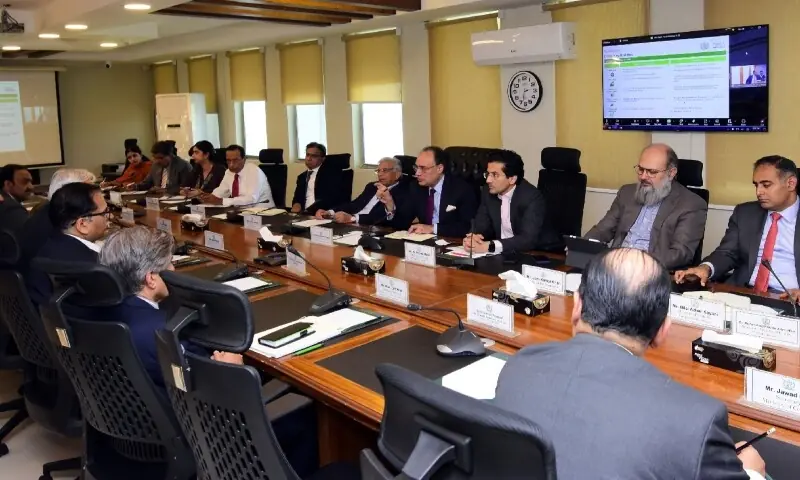
A series of back-to-back meetings of these bodies has already been scheduled, underscoring the urgency. Officials indicated that the proposed steps had also been discussed with the International Monetary Fund. Chaired by Finance Minister Muhammad Aurangzeb, the committee heard that many of the measures had already proved effective during the Covid-19 pandemic. Barring health-related restrictions, policies such as remote working, virtual schooling and car-pooling could be revived as early as next week to cut fuel and energy demand, protect foreign exchange reserves and reduce pressure on both the national budget and ordinary households.
An official statement released after the meeting confirmed that the committee had carried out a thorough review of the country’s energy sector preparedness amid the rapidly evolving regional and global situation. It examined current stock positions for petroleum products across Pakistan and concluded that national reserves remain at comfortable levels with sufficient cover for key products. There is, it said, no immediate cause for concern over availability.
Nevertheless, the statement described the outlook as “fluid and uncertain”, requiring sustained vigilance as global supply chains and shipping routes face heightened risk and cost pressures. The committee analysed multiple supply and pricing scenarios, including movements in international benchmarks, sharply rising freight and insurance costs, changes in maritime routing and the danger of congestion at critical chokepoints.
Particular attention was paid to “war premium” dynamics in oil markets and intensified competition for energy cargoes, especially in Asia, which could place additional strain on Pakistan’s external accounts if volatility persists. In response, Pakistan has already made a formal request to Saudi Arabia for alternative oil supplies to be routed through the Red Sea to keep the country’s fuel chain intact.
The committee discussed broader efforts to strengthen supply assurance through diversified sourcing and logistics, including diplomatic and commercial outreach to friendly countries and partner suppliers. Options under consideration include securing additional volumes of crude and refined products via safer routes and ports outside high-risk corridors, as well as making greater use of national shipping capacity to reduce delays.
To maintain orderly market conditions, the authorities plan coordinated enforcement actions against hoarding, illegal storage and diversion of supplies. Provincial administrations will work closely with the Oil and Gas Regulatory Authority and other agencies to prevent outward smuggling and ensure uninterrupted domestic distribution, backed by real-time intelligence and strict penalties for violations.
Aurangzeb was quoted in the statement as saying the government’s overriding priority was to guarantee uninterrupted availability of petroleum products nationwide. He stressed that availability would remain the primary driver of all policy decisions and that any unavoidable price adjustments prompted by international market movements would be handled through established and predictable mechanisms to avoid distortions and preserve stability.
The committee also reviewed the situation for liquefied petroleum gas and liquefied natural gas, including supply chain risks, shipment schedules and terminal operations, and explored contingency options for efficient demand management while protecting priority sectors. The government has committed to daily meetings of the committee to monitor developments, review stock positions and supply chain movements, and ensure coordinated action. A full implementation plan covering supply assurance, enforcement, pricing governance and conservation measures is to be finalised and submitted to the prime minister on Friday.
The moves come as the United States and Israel’s conflict with Iran enters its sixth day, with shipping through the Strait of Hormuz effectively paralysed and global energy markets on edge.
Copyright © 2021 Independent Pakistan | All rights reserved