By Staff Reporter
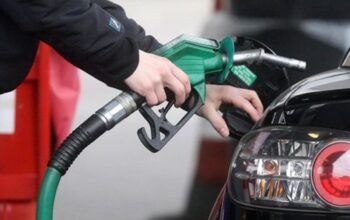
ISLAMABAD: The federal government and the four provinces are preparing to implement another significant rise in petrol and diesel prices within days, aiming to pass through part of the higher landed cost of imports to consumers while shielding targeted groups such as motorcyclists and farmers with subsidised fuel.
The quantum of the increase is still being calculated and will depend on the latest global price movements, according to a senior government official who spoke after a high-level meeting chaired by Finance Minister Muhammad Aurangzeb. The meeting included the chief ministers of all four provinces, Khyber Pakhtunkhwa’s finance minister, and key federal economic officials.
“Prices of both petrol and diesel are set to go up within days,” the official said. “The quantum of increase is being worked out, depending on the latest changes globally.” He added that even a full pass-through of the international impact “cannot be ruled out,” though selective protections for priority segments would be maintained according to provincial priorities.
The current price gap stands at about 100 rupees a liter for petrol and more than 200 rupees a liter for diesel. Officials are debating whether to pass on the entire petrol gap and half the diesel gap to consumers, with a final decision expected Friday once the Petroleum Division and the Oil and Gas Regulatory Authority (Ogra) provide updated calculations.
The federal government has already spent about 129 billion rupees on subsidies for the two fuels over the past three weeks and has drawn a line at 158 billion rupees. The push for provincial burden-sharing stems from intense behind-the-scenes discussions involving President Asif Ali Zardari and Prime Minister Shehbaz Sharif. Both leaders pressed the provinces to help shoulder the subsidy cost that the center had been bearing alone, the official said.
Under the agreement reached in the meeting, Punjab and Sindh will contribute subsidies in line with their population shares as defined by the National Finance Commission award. Balochistan and Khyber Pakhtunkhwa will participate on the basis of their respective fuel consumption. The two larger provinces had pushed for a complete price adjustment on both products paired with direct, targeted subsidies only for priority sectors, but were told such a move would be “politically explosive.”
Global oil prices surged again on Monday and Tuesday after a brief lull, leaving provincial financial commitments still uncertain despite repeated persuasion by the finance minister. What was settled, however, is that all provinces will directly subsidise motorcyclists and three-wheelers, with Prime Minister Sharif expected to announce a uniform national rationing quantity. The subsidised price for these users will be set according to the latest landed cost of imports.
Sindh will extend diesel subsidies to its farming community through the existing Hari card database; Punjab and Khyber Pakhtunkhwa have agreed to adopt similar mechanisms. The bigger headache remains goods transportation, where higher diesel costs risk feeding directly into inflation for perishable foods and other essentials.
Officials estimate the combined provincial subsidy requirement at 15 billion to 18 billion rupees a week under current pricing trends. Even if the weekly bill climbs to 30 billion rupees, the provinces believe they can absorb it jointly over the remaining three months of the fiscal year ending June 30 — though it remains unclear whether the elevated international prices will become the new baseline.
The provinces also agreed not to raise fares on their Bus Rapid Transit systems, a decision that will shield urban commuters in major cities but is likely to widen cost disparities for populations outside those networks.
Copyright © 2021 Independent Pakistan | All rights reserved