By Staff Reporter
ISLAMABAD: Pakistani power authorities told regulators on Tuesday that liquefied natural gas supplies have been declared unavailable under force majeure, halting deliveries to more than 4,500 megawatts of gas-fired generation capacity as a month-long US-Israeli war on Iran triggers the first major global fuel crunch in years.
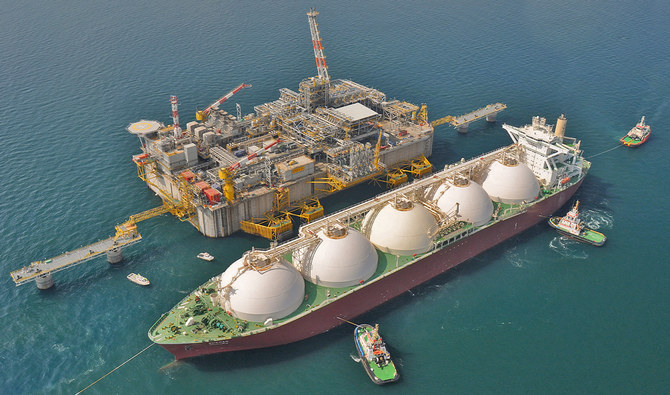
The disclosure, made at a public hearing of the National Electric Power Regulatory Authority, shows the speed with which the conflict has rippled through energy markets. Force majeure clauses, which excuse contractual obligations when events beyond a party’s control occur, were invoked after Qatar — supplier of roughly 20% of the world’s LNG — suspended operations at its facilities on March 2 and formally declared force majeure two days later. Disruptions in the Strait of Hormuz, which carried about one-fifth of global LNG and a quarter of seaborne crude before the war, have compounded the shortfall.
Central Power Purchasing Agency Chief Executive Officer Rehan Akhtar told the hearing that while LNG is now under force majeure, coal imports remain unaffected. The bulk of Pakistan’s thermal coal arrives from South Africa and Indonesia and has so far escaped the Middle East turmoil, he said. LNG-based plants, among the most efficient in the country’s fleet, cannot be switched to domestic gas diverted from older plants tied to dedicated fields, Akhtar added in response to questions.
Some transportation bottlenecks have emerged for coal deliveries to the Sahiwal and Jamshoro power plants, but the Power Division, CPPA and other agencies are meeting daily to protect inventories and maximize output, he said.
Power Planning and Monitoring Company Chief Financial Officer Naveed Qaiser sought to reassure the regulator and the public that the government is managing the situation aggressively. “Things are under control at the moment, and no big shock is foreseen,” Qaiser testified. Fuel-cost adjustments will not jump by the Rs8-10 per unit that had been feared, he said, adding that officials are working “on a daily basis and at almost every level” to shield consumers.
To ease grid strain, authorities plan to introduce a pricing package that encourages greater daytime consumption of cheaper power, when solar output is also available. “The cheaper electricity available during daytime will be utilised in a better way, and measures would be taken after taking people into confidence over whatever the situation is,” Qaiser said.
Tariff Stability for April; K-Electric Flows Deliver Relief
Electricity rates for April will hold steady for most consumers, Akhtar confirmed. A positive fuel-cost adjustment of Rs1.64 per unit for February usage will replace the Rs1.63 per unit adjustment for January that was billed in March.
National grid supplies to K-Electric continue to generate savings on both sides of the ledger. Without that power, Karachi consumers and the broader system would have faced an extra Rs1.05 per kilowatt-hour in the February fuel-cost adjustment plus a Rs3.03 per kilowatt-hour increase in capacity purchase price — a combined Rs4.08 per kilowatt-hour hit — while the quarterly tariff adjustment for February would have been Rs2.79 per unit higher, Akhtar said.
The chronic circular debt that has long weighed on Pakistan’s power sector is also being kept in check. Akhtar said the balance will not exceed Rs1.69 trillion by the end of the current fiscal year, even after seasonal swings and budgeted subsidies. Qaiser reported that circular debt stood at Rs1.7 trillion in January, down Rs780 billion from Rs2.4 trillion a year earlier.
Industrial Tariffs Cut Sharply as Consumption Surges
The government has absorbed substantial cost pressures to deliver relief downstream. In the first eight months of fiscal 2025-26 (July-February), cumulative savings of Rs46.56 billion were passed to consumers, trimming the average consumer-end tariff by Rs0.71 per kilowatt-hour, officials told the hearing.
The benefit has been most pronounced for the industry. Pre-tax industrial tariffs have fallen to Rs34.75 per unit (12 cents) in March 2026 from Rs49.19 per unit (18 cents) in March 2024 — a decline of Rs14.44 per unit. An incremental tariff package has driven a 25% increase in industrial power consumption and a 7% rise in the agriculture sector. More than 43% of industrial consumers and 35% of agricultural users have taken advantage of the incentives, with 203,367 customers qualifying for lower rates on higher usage.
Industry representatives used the hearing to press Nepra to recommend a fixed, all-inclusive industrial tariff for export-oriented and import-substitution sectors. They called for a rate locked between 8 and 9 cents per unit — with a hard ceiling of nine cents — for at least five years to remove uncertainty from quarterly adjustments, debt-servicing surcharges and other levies and to preserve competitiveness.
Officials said the government remains focused on stability and is preparing an additional daytime tariff package to promote solar-era consumption patterns. Qaiser reiterated that the authorities are “working on a tariff package to encourage better utilisation of electricity during the daytime when solar power generation was also possible.”
Copyright © 2021 Independent Pakistan | All rights reserved