By Staff Reporter
ISLAMABAD: Pakistan’s inflation rate is poised to remain within a range of 8 percent to 9 percent in September and October, building on a recovery that’s gaining traction, the finance ministry said on Friday.
The consumer price index (CPI) dropped to a 34-month low of 9.6% in August from 27.4 percent a year earlier on declining price pressures.
“Inflation is expected to remain within the range of 8.0 percent to 9.0 percent in September and October 2024,” the ministry said in its monthly Economic Update.
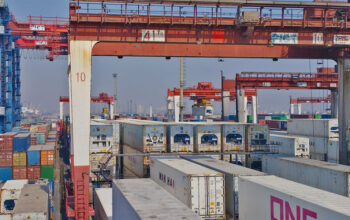
The South Asian nation’s exports are likely to increase, with September shipments forecast at $2.5 billion to $3 billion. Imports may reach $4.5 billion to $5 billion, while workers’ remittances are expected to come in at $2.7 billion to $3.2 billion.
“Following a phase of decline, LSM (large scale manufacturing) is now regaining its footing and major exporting sectors show readiness to scale up production,” the ministry said. “This recovery is expected to be bolstered by a favorable external environment, a stable exchange rate, and declining inflationary pressures.”
The ministry said an accommodative monetary policy stance, improved investor’s confidence and the global market recovery, will provide additional support to foster the sustainable industrial growth. “Government’s commitment to fiscal consolidation will contribute to improved fiscal accounts.”
The monthly upadte said the economy is indicating positive developments during the first two months of FY2025 as most of the economic indicators have shown improvement. Inflation has dropped to single digit, industrial output has increased, and large exporting sectors have witnessed growth, reflecting an optimistic outlook for exports. The current account deficit contracted, while the fiscal sector remained resilient, mainly attributed to prudent measures. This trajectory is expected to continue in the coming months.
Agriculture
The agriculture sector is adapting to modernization and innovation in farming practices, with an expected elevation in yield. During FY2025 (July-August), imports of agricultural machinery and implements increased by 105.6 percent to $17.6 million, compared to the same period last year. This growing commitment to mechanization and innovation in farming practices is expected to enhance yields in the coming months.
Urea offtake during Kharif 2024 (April-August) was recorded at 2,381 thousand tonnes, 13.6 percent less than in Kharif 2023. Similarly, DAP offtake decreased by 21.9 percent compared to Kharif 2023. The decline can be attributed to the late sowing of Kharif crops, resulting from climate change, lower wheat prices, and reduced cotton acreage.
Industry
The Large-Scale Manufacturing (LSM) sector growth has rebounded after a long contraction. LSM output increased by 2.4 percent in July 2024, rebounding from a 5.4 percent contraction in July 2023, reflecting improved market conditions and policy support. During this period, 14 out of 22 sectors witnessed positive growth, including Textile, Food, Beverages, Wearing Apparel, Coke & Petroleum Products, Chemicals, Automobiles, and Paper & Board. Textile, with the largest weight in LSM (18.2), turned positive after 24 months.
Additionally, production and sales of all vehicles witnessed increases of 19.5 percent and 16.3 percent, respectively, during July-August FY2025. This includes a 15.0 percent increase in car production and a 120.4 percent increase in Trucks & Buses production, whereas tractor production showed a decline of 26.9 percent.
Total cement dispatches recorded 6.4 million tonnes during July-August FY2025, reflecting a 17.8 percent decline compared to the same period last year. Domestic dispatches were 5.2 million tonnes, down 20.7 percent from 6.6 million tonnes last year, while exports witnessed a slight dip of 1.6 percent, falling from 1.18 million tonnes to 1.16 million tonnes.
Inflation
CPI inflation has dropped to a single digit, with further decreases anticipated in the near term. CPI inflation receded to single digits, the lowest in 34 months, in August 2024, recording 9.6 percent on a year-on-year basis compared to 27.4 percent in the same month last year. On a month-on-month (MoM) basis, it increased by 0.4 percent in August 2024, compared to an increase of 2.1 percent in the previous month and an increase of 1.7 percent in August 2023. The major drivers contributing to the year-on-year increase in CPI include perishable food items (41.0 percent), Housing, Water, Electricity, Gas, and Fuels (22.2 percent), Health (17.8 percent), Clothing and Footwear (17.3 percent), and Transport (3.2 percent), while non-perishable food items declined by 2.6 percent.
Amid diminishing inflationary pressures, improved inflation expectations and business confidence, the Monetary Policy Committee (MPC) cut the policy rate by 200 basis points to 17.5 percent in its decision held on September 12, 2024. During 1st July – 30th August FY2025, money supply (M2) shows negative growth of 2.6 percent (Rs. -962.3 billion) compared to negative growth of 1.4 percent (Rs. -449.5 billion) last year.
Fiscal sector
In July FY2025, the net federal revenues grew by 7.2 percent to Rs 408.4 billion from Rs 380.9 billion last year. The growth in revenues has been realized on the back of 22.6 percent increase in tax collection and 20.5 percent rise in non-tax collection. The main contributor of non-tax revenues was the petroleum levy which surged to Rs 83.6 billion. Total expenditures grew by 19.2 percent to Rs 768.6 billion in July FY2025 against Rs 644.9 billion last year. Consequently, the fiscal deficit recorded at 0.3 percent of GDP as against 0.2 percent of GDP in the same month of last year. Primary balance managed to post a surplus of 0.1 percent of GDP compared to 0.3 percent of GDP last year. During Jul-Aug FY2025, the FBR net tax collection grew by 20.6 percent to Rs 1,456 billion as compared to Rs 1,207.5 billion same period last year. In August 2024, FBR collected 19.0 percent more taxes to reach Rs 796 billion from Rs669 billion last year.
The external account is strengthening amid increased inflows. The external account position has strengthened due to improved exports and remittances nevertheless imports also increased. During Jul-Aug FY2025, the current account registered a deficit of $ 0.2 billion compared to $ 0.9 billion last year however, it recorded a surplus of $ 75 million in August 2024.
Trade
During Jul-Aug FY2025, goods exports increased by 7.2 percent, reaching $ 4.9 billion, while imports stood at $ 9.5 billion, compared to $ 8.4 billion last year leading to a trade deficit of $ 4.7 billion. As per Pakistan Bureau of Statistics, the export commodities that registered notable positive growth include Rice (98.6%), Fruits & Vegetables (26.7%), Knitwear (7.2%), Bedwear (7.6%), Readymade Garments (17.9%), and Chemicals & Pharma products (9.7%). The major imports which registered rise include Petroleum crude (107%), Liquied Natural Gas (10.7%), Fertilizer (622%), Machinery (15%), and Iron & steel scrap (4.1%). The service exports grew to $1.2 billion (0.2%) and imports declined to $ 1.7 billion (0.5%), resulting in a trade deficit of $ 0.47 billion compared to $ 0.48 billion last year. IT exports grew by 30.2% to $0.6 billion against $ 0.4 billion last year.
Investment
Foreign Direct Investment (FDI) stood at $ 350 million, 55.5 percent up from the previous year. The main contributors to this growth were China ($175 million), Hong Kong ($70 million), and the UK ($43.5 million). The power sector received FDI of $210 million, accounting for a 60 percent share, followed by Oil & Gas exploration with $ 44.2 million (12.6% share). Moreover, private sector Foreign Portfolio Investment (FPI) had a net inflow of $ 24 million, while Public FPI recorded a net inflow of $78.2 million. Workers’ remittances increased by 44% reaching $5.9 billion, with the largest share from Saudi Arabia (25%).
Copyright © 2021 Independent Pakistan | All rights reserved