By Staff Reporter
ISLAMABAD: Prime Minister Shehbaz Sharif directed authorities to impose stringent measures against the smuggling and illegal hoarding of petroleum products, his office said on Tuesday.
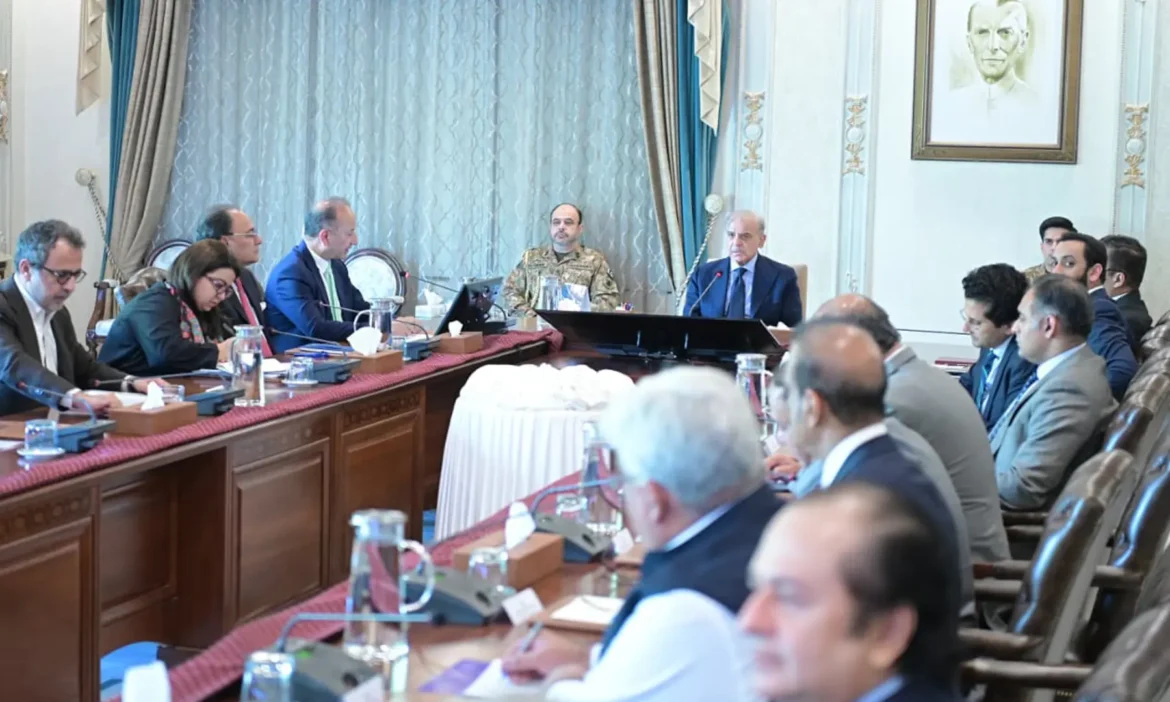
The instructions came after Sharif chaired a meeting in Islamabad that examined the petroleum products supply chain and the austerity steps the government rolled out in response to the Middle East conflict. The war began Feb. 28 when the US and Israel launched attacks on Iran, triggering a global fuel crisis triggered by disruptions to traffic in the Strait of Hormuz. The waterway had carried about 20% of global liquefied natural gas and a quarter of seaborne oil before the war.
Pakistan announced unprecedented austerity measures on March 9 and initially raised petrol and diesel prices by 55 rupees a liter. Sharif has since rejected three proposals for additional increases in those two fuel prices
Tuesday’s meeting reviewed options for providing relief to low-income groups in the current environment. Sharif told ministers to consult the provinces and return with final recommendations, the statement said. He also ordered strict enforcement against smuggling and illegal hoarding of petroleum products. “The federal government has taken significant steps over the past three weeks to provide relief to low-income groups, and it will continue to take such measures in the future as well,” the statement quoted Sharif as saying.
The government has already delivered 129 billion rupees in relief to ordinary Pakistanis by trimming the development budget and enforcing austerity, he said. Sufficient stocks of petroleum products are in place to meet national requirements because of timely decisions taken by the federal government, Sharif added. “Providing relief to the people is our top priority.”
Officials briefed the meeting on progress in implementing the austerity package. They told Sharif that supply, demand and the overall petroleum supply chain are being tracked in real time through a digital dashboard. Several federal ministers and senior officials attended the session.
Separately, the Finance Ministry struck a note of cautious optimism about Pakistan’s near-term economic prospects while flagging longer-term risks from higher global oil prices linked to the US-Israel war on Iran. “Rising global oil prices and potential supply chain disruptions may exert pressure on industrial input costs,” the ministry said in its Monthly Economic Update and Outlook. It projected inflation rising by as much as 8.5% for the month. The near-term outlook remains cautiously optimistic despite the emerging geopolitical risks, the report said.
Recent data point to improving momentum in the industrial sector, led by higher imports of textile machinery as well as transport and construction-related inputs that are expected to lift domestic activity. The government is taking prudent steps—including holding adequate petroleum reserves, managing energy demand and sticking to fiscal austerity—to protect the domestic economy, according to the ministry.
Inflation is forecast to stay in a 7.5% to 8.5% range for March 2026, it said. On the external accounts, the ministry expects strong remittance inflows, particularly those tied to Eid celebrations, although the pace will hinge on economic conditions in the countries where overseas Pakistanis work. Growth in information-technology exports is also providing fresh support to foreign-exchange earnings. The current-account deficit is likely to remain manageable, even as rising oil prices pose a threat to the import bill.
Notwithstanding downside risks from global uncertainties, the latest indicators suggest the economy is better positioned to absorb external shocks and preserve overall resilience in the coming months, the ministry said. Pakistan’s economy has recorded encouraging progress across key metrics during the first eight months of the fiscal year. The current account posted its largest surplus of the year in February, helped by stronger remittances and lower imports.
IT exports maintained their growth trajectory, reinforcing the country’s push into digital transformation. Foreign-exchange reserves climbed to a four-year high, with a notable increase in central-bank holdings that points to stronger sovereign liquidity and improved capacity to handle crises. Large-scale manufacturing posted strong double-digit growth in January, giving further momentum to the industrial recovery and broader economic activity. In the wake of the US-Israel-Iran conflict, proactive planning and austerity measures on the energy front have helped secure adequate fuel reserves and kept operations running smoothly, the ministry said. Pakistan’s preparedness, ongoing reforms and solid domestic indicators are laying the foundation for sustainable growth prospects.
Copyright © 2021 Independent Pakistan | All rights reserved