Political instability is the bane of Pakistan’s economy right now, as warned first by Moody’s and now the Economist
By Staff Reporter
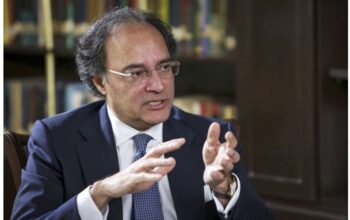
A day after Moody’s downgraded Pakistan’s outlook from stable to negative citing “political and social risk”, British weekly the Economist has provided an apt translation for the obscure jargon: “Imran Khan is jeopardising Pakistan’s attempts to fix its economy”.
Mutual recriminations are the staple of Pakistani politics. Before he was ousted in a parliamentary vote of no confidence on April 10, Khan spent three-and-a-half years as prime minister blaming his predecessors for all ills of the economy.
Since his ouster, the Pakistan Democratic Front (PDM) coalition that supplanted him in power has reminded us every day how the omissions and commissions of the cricketer-turned-politician wrecked the country’s economy.
The downgrade by Moody’s seemed to lend credence to the latter’s point of view when it assessed Pakistan’s external vulnerability risk as “amplified by rising inflation, which puts downward pressure on the current account, the currency and already thin foreign exchange reserves”.
Khan, the chairman of his own Pakistan Tehreek-e-Insaf (PTI) party, ruled as arguably the most powerful prime minister of Pakistan for three and a half years before being ousted in a parliamentary vote of no confidence. Surely, he cannot evade responsibility for the shape the country’s economy is in today.
But apparently, he can. In fiery public remarks aimed at the country’s gullible youth, Khan and his top aides have doubled down on the message that the crippling economic crisis staring Pakistan in the eye has been brought on by his ouster from power.
They would have us believe their leader’s government had nothing to do with the devaluation of the rupee or the piling up of budget and current account deficit or the raging inflation. But while Khan’s dedicated followers may be prepared to lap up whatever drivel he and his inner coterie dishes up, there are plenty of people who can see right through their demagoguery.
Now Moody’s and The Economist have joined the long list of voices calling out Khan not only for ruining Pakistan’s economy in the first place but also for undermining the incumbent government’s efforts to shore up the economy.
While Khan’s coterie could discredit any such voices coming from within Pakistan as politically motivated or hired opinions, authoritative views emanating from highly respected international institutions may not be so easy to brush aside. The question, however, is: Does the demagogue care?
Khan’s fury is rooted in his ouster from power – which was prim and proper under the Pakistani law and Constitution. Under the parliamentary form of democracy adopted by Pakistan, the prime minister rules only as long as he has the confidence of the majority of the National Assembly membership.
Khan’s PTI never had a majority in the National Assembly. He rose to power thanks to help from coalition partners. When those partners dumped him to join the other side, there was no way he could stay on in power. But that does not mean Khan would take it lying down.
“He blames his inauspicious exit on a conspiracy between the opposition and America, which he claims was keen to see the back of him because he refused to pander to America’s foreign-policy demands”, says the Economist. “America says this is nonsense. Mr Khan’s supporters have lapped it up anyway.”
Since the fizzling out of his promised long march on Islamabad and the calling off of a sit-in to demand early elections, the worst of Khan’s fire and fury seems to be over. But if the messaging and rhetoric of his recent speeches is any indication to go by, Khan has no intention of renouncing his scorched earth tactics.
And while he may not have the parliamentary clout to dislodge the incumbent government or the credibility to galvanise the street to pose it a serious challenge, Imran Khan will continue to sway the small number of diehard fans who would follow him to the ends of the earth.
There is an old saw that says you cannot fool all the people all the time. Unfortunately, however, it seems you can fool enough people for long enough to wreck an economy.
On the other hand, the responsibility for economic stabilisation rests not with Imran Khan but Shehbaz Sharif, the incumbent prime minister. Being a democratic leader, he cannot just order Khan to shut his mouth, but being a prime minister at the head of a powerful coalition, he should not be at a loss for resources to usher in political stability in spite of Khan’s troublemaking.
Above all, the urgency of the situation being what it is, the sooner he seizes the initiative the better. In terms of economic management, his government has already started on the right path by taking unpopular measures like withdrawal of energy subsidies.
This clearly means PM Sharif has the political will to put the people to pain when necessary. All the people’s travails, however, would be in vain if he cannot deliver the requisite economic stabilisation in due course.
Which brings us back to “the context of heightened political and social risk” – something the country can ill afford. This clearly means PM Sharif has a duty to either remove any stumbling blocks in the way of political stability or – if any of them be too intractable for his handling – to come clean to the nation as to its nature.
Copyright © 2021 Independent Pakistan | All rights reserved