By Staff Reporter
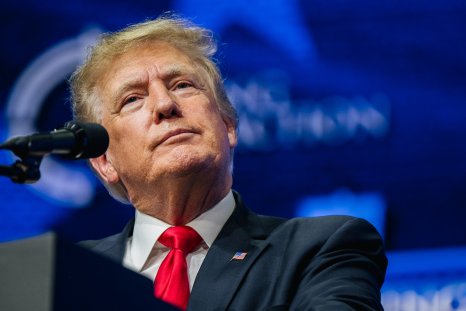
ISLAMABAD: President Donald Trump on Sunday dismissed Iran’s formal response to the latest US proposal for ending the war in the Persian Gulf as “TOTALLY UNACCEPTABLE,” delivering a sharp setback to diplomatic efforts aimed at reopening the Strait of Hormuz and halting a conflict that has disrupted global energy markets and tested a month-old ceasefire.
The Iranian response, conveyed through Pakistani mediators, came hours before Trump’s blunt social media declaration. Iranian state television reported that Tehran had rejected the American plan as tantamount to surrender. Instead, officials demanded war reparations from the United States, recognition of full Iranian sovereignty over the Strait of Hormuz, the lifting of all sanctions and the release of Iranian assets seized abroad.
The US proposal had centered on a comprehensive deal to end the fighting, restore free transit through the vital waterway and impose new limits on Iran’s nuclear program. Trump offered no further details in his rejection, which he posted on Truth Social. In an earlier message, he accused Tehran of “playing games” with the United States for nearly 50 years. “They will be laughing no longer!” he wrote.
The exchange underscored the precarious state of diplomacy more than a month after Trump announced a temporary ceasefire that suspended the US-Israeli military campaign launched Feb. 28. Although the truce has largely held, intermittent clashes and Iran’s continued blockade of the Strait of Hormuz have kept tensions high and energy prices volatile.
US Ambassador to the United Nations Mike Waltz told ABC News earlier on Sunday that the administration was “giving diplomacy every chance we possibly can before going back to hostilities.”
Iran’s new supreme leader, Mojtaba Khamenei — who has not appeared or spoken publicly since the war began — met with the head of the joint military command and issued “new and decisive directives for the continuation of operations and the powerful confrontation with the enemies,” according to Iranian state television. No specifics were released.
The diplomatic impasse coincided with a series of incidents that tested the ceasefire. A drone struck a ship off Qatar, igniting a small fire but causing no casualties, according to the United Kingdom Maritime Trade Operations Center. Qatar’s Foreign Ministry described the attack as “a dangerous and unacceptable escalation that threatens the security and safety of maritime trade routes and vital supplies in the region.”
The United Arab Emirates reported shooting down two drones it blamed on Iran, while Kuwait said its forces had responded to unidentified drones entering its airspace. No one immediately claimed responsibility for the strikes, and Iranian officials did not comment. Iran and its allied militias, including Lebanon’s Hezbollah, have launched hundreds of drone attacks since the conflict began. In response, the United States has maintained a naval blockade of Iranian ports since April 13, turning back 61 commercial vessels and disabling four others. On Friday, US forces struck two Iranian oil tankers attempting to breach the blockade, prompting Iran’s Revolutionary Guard navy to warn of a “heavy assault” on U.S. bases and enemy ships in the region.
Iranian military spokesman Brig. Gen. Mohammad Akraminia, speaking in an interview posted late Saturday, said forces remained on “full readiness” to protect sites storing enriched uranium. The UN nuclear watchdog has reported that Iran possesses more than 440 kilograms (970 pounds) of uranium enriched to 60 percent purity — a short technical step from weapons-grade material. Much of it is believed to be stored at the Isfahan nuclear complex, which was damaged in US-Israeli strikes last year and again this year.
Israeli Prime Minister Benjamin Netanyahu, in excerpts from an interview aired Sunday on CBS’s “60 Minutes,” insisted the war was not over. “There is still nuclear material, enriched uranium, that has to be taken out of Iran,” he said. “There’s still enrichment sites that have to be dismantled.” Netanyahu added that Trump had told him privately, “I want to go in there,” and that he believed it could be accomplished.
Netanyahu also denied a New York Times report that he had pressed Trump to launch the war in hopes of achieving regime change in Tehran. “We both agreed … that there was both uncertainty and risk involved,” he said. “There’s danger in action, but there’s greater danger in not taking action.” Russian President Vladimir Putin said Saturday that Moscow’s offer to remove Iran’s enriched uranium stockpile as part of a negotiated settlement remained available.
On the economic front, oil prices rose sharply in Asian trading on Monday morning after Trump’s rejection. The international benchmark Brent crude climbed 3.1 percent to $104.50 a barrel, while US crude rose 3 percent to $98.40. Iran has effectively shut the Strait of Hormuz — through which roughly one-fifth of the world’s oil and natural gas normally flows — since the early days of the conflict, rattling markets and hitting Asian economies especially hard.
Iran’s deputy foreign minister, Kazem Gharibabadi, warned on Sunday against any French or British naval presence in the strait, even as part of a planned international mission to secure shipping once hostilities fully cease. “The presence of French and British vessels … will be met with a decisive and immediate response,” he wrote on social media.
French President Emmanuel Macron responded that the effort would not involve a military deployment but rather a coordinated international security mission once conditions permitted. British Prime Minister Keir Starmer has similarly said any such operation would await the end of fighting. Defence ministers from more than 40 nations are scheduled to meet in London on Monday to discuss the British-led plan.
Iranian President Masoud Pezeshkian, speaking on Sunday, did not address the US proposal directly but declared, “We will never bow our heads before the enemy, and if talk of dialogue or negotiation arises, it does not mean surrender or retreat.”
Semi-official Iranian media, including Tasnim News Agency, portrayed Trump’s reaction as irrelevant. “No one in Iran writes proposals to please Trump,” an informed source told the agency. “If Trump was dissatisfied … then it is naturally better.”
The two sides have been negotiating a possible extension of the ceasefire and a reopening of the strait, with the goal of forging a broader agreement during that period. The original truce, announced by Trump last month and later extended indefinitely, followed intense US-Israeli airstrikes on Iranian nuclear and military targets.
Trump is scheduled to arrive in Beijing on Wednesday for talks with Chinese President Xi Jinping, a trip postponed from earlier this year because of the Iran conflict. Administration officials said the agenda would include pressing China to curtail its purchases of Iranian oil and any dual-use goods that could aid Tehran’s military. Treasury Secretary Scott Bessent last week accused Beijing of “funding” Iran, the “largest state sponsor of terrorism,” by buying 90 percent of its energy exports.
Copyright © 2021 Independent Pakistan | All rights reserved