By Staff Reporter
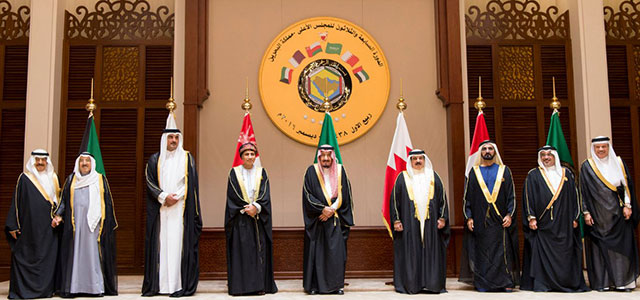
The war the United States and Israel launched against Iran in February was sold as a limited operation to degrade a nuclear threat. It has become something far more consequential: a wrecking ball swung through the fragile security architecture of the Persian Gulf. For the six monarchies of the Gulf Cooperation Council, the conflict did not simply interrupt their carefully calibrated balancing act between Washington, Tehran, and their own divergent interests. It exposed the act itself as unsustainable. The economic damage is already staggering and grotesquely uneven. Iran’s closure of the Strait of Hormuz — the conduit for roughly one-fifth of global oil and liquefied natural gas — produced what the International Energy Agency called the largest supply shock in the history of the energy market. More than 12 million barrels a day were shut in. Some 40 energy facilities were damaged or forced offline. Brent crude jumped 60 percent in March, the largest monthly increase on record. But the windfall did not flow evenly. Iran’s oil revenues rose 37 percent. Oman’s climbed 26 percent. Saudi Arabia eked out a 4.3 percent gain, thanks to the 1,200-kilometer East-West pipeline constructed during the Iran-Iraq War, now running at full 5-million-barrel-a-day capacity to the Red Sea port of Yanbu. The United Arab Emirates found partial shelter in its Habshan-Fujairah bypass. Iraq and Kuwait, with no viable alternatives, watched export revenues collapse by roughly three-quarters. Qatar’s Ras Laffan complex, a cornerstone of global LNG supply, suffered strikes that could require years of repairs. Non-oil sectors — aviation, tourism, logistics, even the desalination plants that turn seawater into drinking water — were hit directly. Food imports that normally move through the strait were thrown into crisis. The International Monetary Fund has now slashed its growth forecast for the Gulf Cooperation Council to 2 percent this year, down from 4.3 percent before the fighting began. For the broader Middle East and North Africa, the outlook is even grimmer: 1.1 percent growth, 2.8 percentage points below prewar projections. IMF Middle East director Jihad Azour noted that the shock extends beyond crude: fertilizer exports, specialty chemicals, and the region’s role as a logistics and aviation hub have all been disrupted. These are not temporary price spikes. They are structural scars on economies that have spent years trying to reduce their dependence on oil.
The deeper wound is political, though, and it is self-inflicted in ways the Gulf states are only beginning to acknowledge. Every GCC capital worked, in its fashion, to prevent escalation. None committed troops to the American-Israeli campaign. Some allowed limited use of bases; most preached restraint. Within hours of the first strikes, however, Iranian missiles and drones struck energy sites, ports, and civilian infrastructure across the UAE, Qatar, Saudi Arabia, Bahrain, and Kuwait. Qatar Energy declared force majeure. The UAE’s Habshan facility was damaged. Houthi proxies renewed threats against Saudi targets on the Red Sea. Tehran’s doctrine, forged in the conviction that it must never again allow such a war, has made its point with chilling economy: in the era of $20,000 drones that can be manufactured underground and launched from anywhere, security is indivisible. This is the trap the Gulf states now inhabit. Confronting Washington carries immediate costs, especially with a president who has threatened to “rain hell” on Tehran unless a deal reopens the strait by his deadline. Yet failing to distance themselves from the aggression has already rendered them legitimate targets under Iran’s new military posture. The limits of American security guarantees have rarely been more painfully obvious. Washington’s alliance with Israel has become, in the words of one analysis circulating in Gulf capitals, “historically unconditional” in a way that increasingly places Israeli priorities above Gulf ones. The old status quo — in which the United States provided protection while Gulf states pursued their own hedging strategies — is finished. The illusion of neutrality died even faster. Qatar had spent years cultivating its role as an honest broker between Washington and Tehran. It kept every channel open. Iranian strikes hit its LNG facilities anyway. The concept of managed tensions has been replaced by something more networked and merciless: simultaneous use of proxies, cyberattacks, maritime blockades, and economic coercion. Geography and global supply chains have turned what once looked like a containable regional quarrel into an immediate shock to European gas prices, Asian fertilizer markets, and mortgage rates from London to Boston.
Internationally, the confusion has been instructive. NATO allies showed little enthusiasm for expanding support. The United Nations Security Council could condemn Iranian strikes on Gulf states but could not reach a consensus on the legitimacy of the original American-Israeli campaign. Two broad camps have formed in Western and Arab capitals. One, drawing on the bitter precedents of Iraq and Libya, insists that regime change by force rarely produces stability and that coexistence with a difficult government is preferable to chaos. The other argues that decades of diplomacy and sanctions only emboldened Tehran and that the war merely revealed what containment could never tame. Both camps slam into the same wall of reality: after the assassination of Supreme Leader Ayatollah Ali Khamenei, a successor was named swiftly, and state institutions continued to function. Regime change offers no credible plan for the day after. Containment assumes a regime still willing to play by the old diplomatic rules — an assumption Tehran’s strikes on non-belligerent neighbours have demolished.
For the Gulf itself, these distant debates matter less than the structural divergences the war has laid bare. The GCC has never been a unitary actor toward Iran, and it will not become one now. Bahrain views Tehran through the narrow lens of regime survival and historical grievance; it co-sponsored UN resolutions demanding an end to Iranian attacks. The UAE has hardened its posture, its ambassador to Washington arguing in the Wall Street Journal that a mere ceasefire is insufficient and that a “conclusive outcome” must address Iran’s missiles, proxies, nuclear program, and Hormuz ambitions. Saudi Arabia hedges, balancing the need for deterrence with the requirements of Vision 2030, engaging Iranian diplomats through Pakistani mediators while trying to position itself as the pragmatic center of the Council. Kuwait and Bahrain tilt toward this axis but prefer measured language. Qatar and Oman, by contrast, continue to speak the language of coexistence. Qatar’s deputy foreign minister insisted that “the total annihilation of Iran is not an option” and that the Gulf and Iran “will live next to each other.” Oman’s foreign minister described Iran’s retaliation as “inevitable” and the war itself as “not America’s war,” urging Washington’s friends to help it find an exit.
These differences are not tactical maneuvering. They are rooted in geography, demography, economic exposure, and collective memory reaching back to 1979. The war has made them more visible and more dangerous. Frustration with American and Israeli policy now simmers alongside anger at Iran. Economic competition between Saudi Arabia and the UAE — already evident in Sudan and Yemen — could intensify. Public opinion, increasingly hostile to Israel in some quarters, adds domestic pressure. In the worst case, these rifts could fracture the Council into competing camps, inviting exactly the foreign meddling its members have always feared. But the same war that exposed these fractures has also handed the littoral states a rare collective opportunity. Iran has been explicit: it will use its demonstrated leverage — the ability to choke the strait with cheap drones — to forge a new order. The alternative to multilateral action is an imposed Iranian framework born of survival rather than consensus. That would be a lost chance for shared prosperity. History offers inspiration, not a template. Europe found stability after Napoleon at the Congress of Vienna and after 1945 through gradual integration. The Strait of Hormuz suffers from a glaring legal vacuum: unlike the Turkish straits governed by the Montreux Convention, it has no dedicated international regulatory treaty. A “Congress for Hormuz,” convened by the states that border it, could fill that vacuum. It could codify a treaty that formalises the strait’s status, asserts local management as a sovereign prerogative, and gives the region legal certainty it has never possessed. In the short term, such a platform would give the Trump administration the political off-ramp it manifestly needs. Gulf leaders could reopen traffic and allow the president to declare that regional allies had solved the crisis he helped create. In the longer term, it would insulate the GCC from a patron willing to subordinate international law and Gulf stability to the interests of an ally none of them can replace or match. The future of Hormuz belongs to its inhabitants, not to distant powers pursuing agendas that are not their own.
The risks of inaction are obvious. Prolonged conflict would deepen economic damage, widen intra-GCC divisions, and allow Tehran to dictate terms unilaterally. The dangers of continued over-reliance on Washington have already been demonstrated in blood and lost revenue. The hope — slender but real — lies in the recognition this war forced upon every capital: security is a collective good. A new architecture need not be exclusively Iranian. It can, and must, be collectively designed. The Gulf Cooperation Council now faces a clarifying choice. It can remain a collection of anxious spectators as a new order is imposed upon it, or it can become the author of that order. The economic data, the missile strikes, the fractured international response, and Iran’s own statements all point to the same conclusion: the old status quo is gone. History will judge whether the Gulf had the wisdom and the courage to write the next chapter — or whether it simply let others write it for them. The moment is dangerous. It may also be the last best chance the region will have to seize control of its own destiny.
Copyright © 2021 Independent Pakistan | All rights reserved