By Staff Reporter
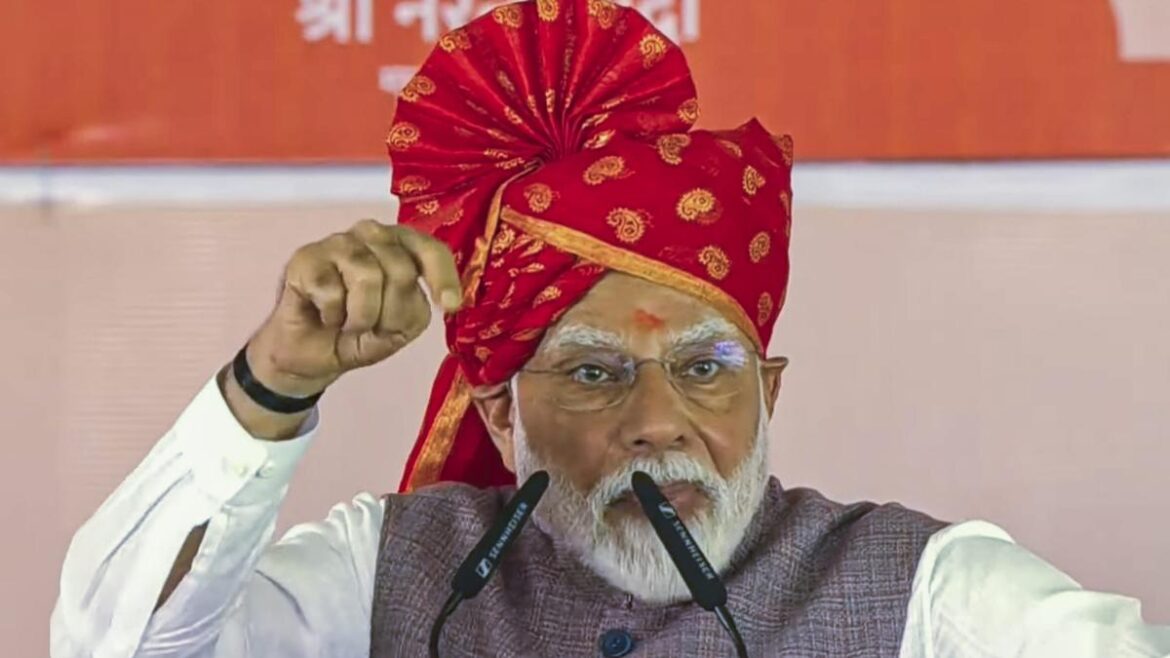
It was September 2016, dusk settling over Kerala, when Narendra Modi made the kind of promise that sounds powerful from a lectern and haunts a legacy for years. Thumping his fist, addressing thousands of supporters, India’s prime minister turned directly toward Pakistan and issued a declaration that would come to define not just his foreign policy but its ultimate verdict. “India has been successful in isolating you,” he said, “and we will intensify those efforts. We will make sure that you are isolated around the world.”
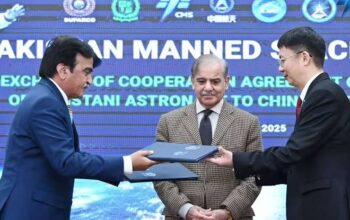
Al-Jazeera reported that nearly a decade on, it is worth pausing to measure that promise against the reality it has produced. Pakistan’s prime minister was in Beijing this week, where President Xi Jinping described the two countries’ relationship as “unbreakable.” Pakistan’s army chief, Field Marshal Asim Munir, has lunched at the White House — an honour extended to no Pakistani military commander who was not also head of state, in the entirety of the US-Pakistan relationship. Pakistan is currently the principal mediator between Washington and Tehran in a diplomatic engagement that produced, in April, the first direct high-level contact between the United States and Iran since 1979. Donald Trump, who in his first term called Pakistan a country of “deceit and lies,” now refers to Munir as his “favourite Field Marshal” and “an exceptional human being.”
These are not the coordinates of an isolated nation. They are the coordinates of a country that has, by almost any diplomatic measure, outmaneuvered the strategy designed to contain it.
“Certainly, India’s strategy of undercutting and indeed isolating Pakistan, regionally and globally, has backfired in a big way,” Michael Kugelman, a senior South Asia fellow at the Atlantic Council, said flatly. That assessment is not partisan commentary. It is the sober conclusion of one of Washington’s most careful analysts of the subcontinent — and it warrants honest examination in the capitals that have been watching this rivalry unfold.
The Architecture of a Failed Strategy
Modi came to power in 2014 with a genuine, if ultimately inconsistent, instinct toward engagement. He invited every South Asian head of government to his inauguration and spoke warmly of a “neighbourhood first” foreign policy. He invited then-Prime Minister Nawaz Sharif. He made an unannounced stop in Lahore to attend Sharif’s granddaughter’s wedding. The gestures were real, and the window they represented was real.
But after the 2016 attack in Indian-occupied Kashmir, the aperture closed. Modi’s government recalibrated sharply, lowering the threshold for military responses and abandoning the older Congress-era doctrine of “strategic restraint” — a doctrine that had, for all its frustrations, kept the subcontinent’s two nuclear-armed rivals from the brink even after the devastating 2008 Mumbai attacks. The new mantra was simpler, harder, and ultimately more politically useful at home: “Terror and talks cannot go together.”
What followed was a decade of deliberate escalation — surgical strikes in 2016, airstrikes deep inside Pakistani territory at Balakot in 2019, and then the four days of ballistic missiles, fighter jets, and drones in May 2025 that constituted the worst fighting between the two countries in decades. Each escalation was domestically legible in India as resolve. Each one was presented internationally as a proportionate response. And each one, over time, yielded diminishing diplomatic returns — until the last produced something that looked, to many observers around the world, like a strategic reversal.
The Narrative India Could Not Win
The May 2025 conflict — India’s Operation Sindoor, launched in response to the massacre of twenty-six tourists in Pahalgam, occupied Kashmir — was supposed to demonstrate Indian military superiority and international legitimacy. It achieved neither with the clarity New Delhi required.
Pakistan shot down several Indian fighter jets. India said nothing about it for nearly three weeks. When the country’s top general finally acknowledged the losses, the silence had already done its damage. The global narrative had hardened. Pakistan had demonstrated that it could hold its own militarily. Chinese weapons systems, deployed by Pakistan during the conflict, drew attention in defence ministries around the world, including, reportedly, in the White House.
More fundamentally, India failed to persuade the international community of what its entire strategic position rested upon — that Pakistan’s government bore direct responsibility for the Pahalgam attack. “The world did not step back and encourage India to carry out strikes,” Kugelman observed. “World capitals noted that India did not provide proof of any Pakistani complicity.” Without that proof — before an international audience that was not predisposed to simply take New Delhi’s word — the moral architecture that had underpinned India’s case against Pakistan for nearly two decades cracked.
Pakistan, for its part, moved with considerable diplomatic agility. It promptly credited Trump for the ceasefire. It nominated him for the Nobel Peace Prize. Trump, who responds predictably to flattery, has since claimed credit for averting nuclear catastrophe more than thirty times. He has visited China. He has indicated readiness to visit Pakistan. He has not yet visited New Delhi, despite a personal invitation from Modi — even as the US president continues to publicly insist he brokered the truce that India insists was bilateral.
The optics of that standoff have not favoured India.
Pakistan has successfully broken the diplomatic quarantine that Modi worked so hard to impose. The brief military conflict between India and Pakistan last May seemed to trigger this shift, as Islamabad managed to turn the crisis into leverage by allowing Trump to claim credit for a ceasefire and nominating him for the Nobel Peace Prize. Meanwhile, a sullen Modi insisted the ceasefire decision was strictly his own. This exchange marked the beginning of a broader strategic reversal in which Pakistan stopped looking isolated and India started looking exposed.
The Costs of Abandoning Autonomy
What makes India’s current position particularly difficult to diagnose is that it is not the product of any single decision. It is the compound consequence of a decade-long drift from the foreign policy framework that had historically given India its most durable international leverage.
India was the founding nation of the Non-Aligned Movement — the architect of a foreign policy that derived its power precisely from its principled refusal to become anyone’s satellite. That posture allowed New Delhi to maintain credible, simultaneous relationships across Cold War fault lines and, later, across the far messier fractures of the post-9/11 world. It gave India a platform from which it could speak to everyone, and from which its voice carried genuine weight.
That framework has been progressively dismantled. India has moved, as Praveen Donthi of the International Crisis Group described it, from “a balanced, largely non-aligned foreign policy” to a more transactional approach — one that has tethered it more tightly to specific partners and specific positions, at the cost of the flexibility that once made it indispensable. Its abandonment of the South Asian Association for Regional Cooperation tells the story efficiently: when India boycotted the 2016 SAARC summit because it was to be held in Islamabad, the summit was cancelled. It has not convened since. “India effectively abandoned SAARC in the pursuit of isolating Pakistan,” as Ishtiaq Ahmad, professor emeritus of international relations at Quaid-i-Azam University, put it. South Asia’s primary multilateral institution is, for practical purposes, defunct — and its paralysis has served as an exhibit in Pakistan’s case, before regional and global audiences, that it is Indian regional hegemony rather than Pakistani conduct that obstructs cooperation.
The regional picture has widened against India in other ways. Bangladesh, after the removal of Sheikh Hasina — seen as close to New Delhi — has sharply improved its diplomatic relations with Islamabad. Pakistan’s deepening partnership with China, already structurally close, was visibly reinforced during the May 2025 conflict, when Pakistani forces employed Chinese weapons systems to significant effect. And at precisely the moment India’s alignment choices have complicated its standing in the Gulf, Pakistan has been tightening its own. Saudi Arabia signed a mutual defence pact with Pakistan in 2025. Other Gulf states are watching.
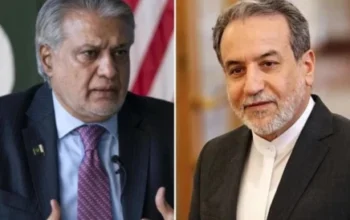
Then there is Pakistan’s emergence as mediator in the US-Iran engagement — a role that would have seemed fantastical just two years ago but which reflects something real about Islamabad’s strategic positioning. On April 11, 2026, senior delegations from the United States and Iran converged in Islamabad for the first time since 1979. Pakistan had leveraged its geographic position, its ties with Tehran, its defence relationships with the Gulf, and its cultivation of the Trump administration — including deals on critical minerals and cryptocurrency arrangements linked to Trump family interests — into a diplomatic role of genuine consequence. For a country still viewed until recently by Trump as a strategic destabilizer, Pakistan’s emergence as a peacemaker is nothing short of a dazzling reinvention.
India, meanwhile, was not in that room.
A Relationship With Washington Under Strain
For more than two decades, the arc of US-India relations had been one of the more reassuring stories in global geopolitics. Four consecutive American presidents — Bush, Obama, Trump in his first term, Biden — oversaw a deepening strategic partnership. All four visited India. None visited Pakistan after Bush. India was Washington’s preferred partner for balancing China’s expansion, a framework that suited both countries and generated the Quad, growing defence cooperation, and substantial bilateral trade now exceeding two hundred billion dollars.
That architecture has not collapsed, but it has been significantly strained. The four-day conflict with Pakistan in May was followed by a downturn in India-US relations. The Trump administration imposed fifty percent tariffs on India over its purchase of Russian crude and the failure to secure a trade deal by the agreed deadline. Adding insult to injury, Washington increased its outreach to Islamabad.
Modi’s refusal to acknowledge Trump’s claimed role in the ceasefire — a defensible position of principle, and one any sovereign government might assert — appears to have carried a personal cost. Trump did not take the rebuff graciously. He has repeated his version of events over thirty times, and has since travelled to China, signalled readiness to go to Pakistan, and left Modi’s White House invitation unanswered for the better part of a year. Secretary of State Marco Rubio’s visit to New Delhi last week — his first since taking office — was a step toward repairing the relationship. It was not the visit India had hoped for.
Sreeram Chaulia, dean of the Jindal School of International Affairs, offered a careful verdict: “The US-India strategic partnership is at its lowest point, but it doesn’t mean the partnership itself is over.” That may well be right. The structural interests that built the partnership — trade, technology, the shared concern about China’s regional footprint, India’s size and economic trajectory — have not disappeared. But those interests do not operate in a vacuum, and the diplomatic atmosphere in which they are pursued has deteriorated in ways that will take patient work to repair.
What Recalibration Requires
There are tentative signs that some in India’s establishment are beginning to reckon with the consequences. The RSS secretary general — the ideological patriarch of Modi’s own political movement — has publicly called for dialogue with Pakistan. Former army chief Manoj Mukund Naravane has backed the proposal. Retired officials and military officers from both sides have met twice in recent months in back-channel formats, testing the waters for a possible resumption of formal engagement.
The Modi government has yet to formally respond to those calls. One analyst put the difficulty plainly: “The Modi government has boxed itself into a corner with its anti-Pakistan rhetoric. For it to unilaterally stand down and initiate dialogue would be potentially politically costly.”
That is the corner into which a decade of hardline public posturing has painted India’s foreign policy establishment. The domestic audience that cheers the confrontation eventually becomes the cage that prevents the retreat. Breaking out of it will require political courage of a kind that runs against the grain of how Modi has governed — and yet the alternative, a continuation of the current trajectory, carries its own compounding risks.
Donthi of the International Crisis Group framed the central challenge with precision: India can no longer afford to view Pakistan “only through a bilateral lens.” With China providing Pakistan’s military and strategic backbone, with Pakistan operating as Washington’s indispensable regional broker, with South Asia’s multilateral architecture in ruins, and with Gulf states recalibrating their own security arrangements in ways that increasingly include Islamabad, the regional environment is not one that India’s isolation strategy helped to shape in its favour. Hyper-nationalist rhetoric in both countries and the unpredictability of non-state armed groups mean the risk of accidental escalation will remain high. Two nuclear-armed states with no functioning back-channels and a seventy-nine-year-old unresolved territorial dispute at the centre of their relationship do not drift toward stability on their own.
Kashmir remains the wound that will not close — 750,000 Indian soldiers stationed in one of the world’s most militarised landscapes, more than sixty thousand lives lost over decades of conflict, a revocation of autonomous status in 2019 that deepened grievances rather than resolved them. The question of what India is ultimately trying to achieve there — and whether what it is doing is working — sits at the heart of a broader strategic reckoning that New Delhi has so far declined to conduct openly.
Modi made a pledge in Kerala in 2016. History has rendered its judgment on that pledge, and the judgment is not kind. The question now is whether India’s foreign policy establishment has the candour to read that verdict clearly — and the will to chart a different course before the next crisis forecloses the option entirely.
Copyright © 2021 Independent Pakistan | All rights reserved