By Staff Reporter
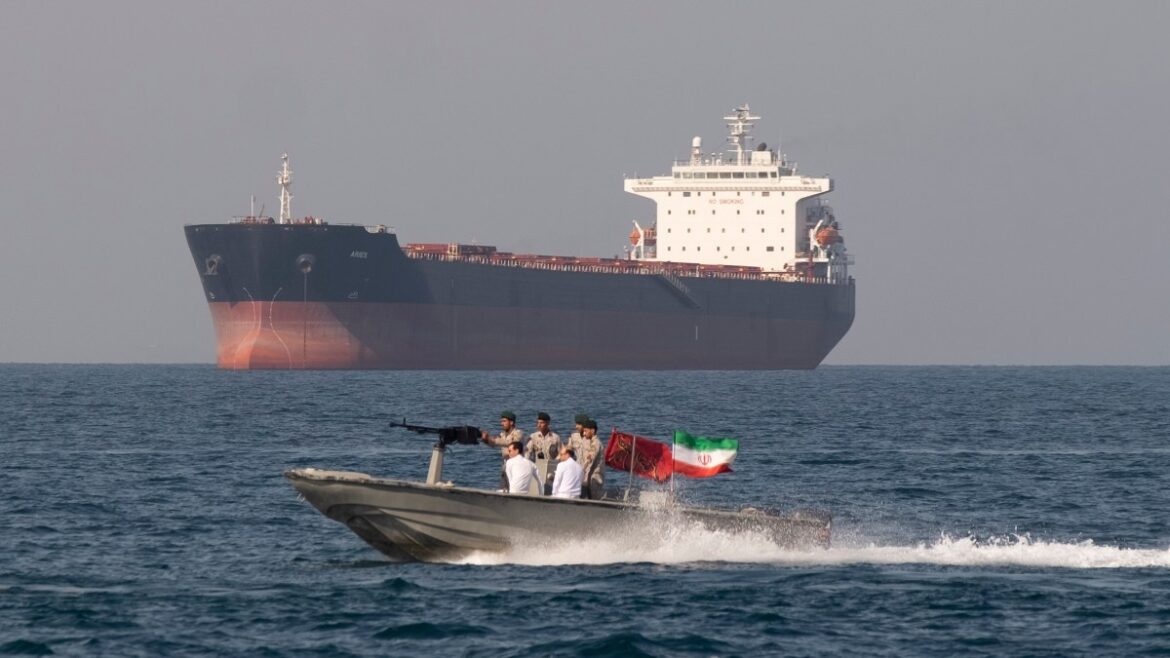
The Strait of Hormuz never had to be formally blockaded. Risk aversion did the job anyway. In the 48 hours since US and Israeli attacks escalated against Iran, global oil markets have lurched higher by as much as 13%, Brent crude has traded near $78-$79 a barrel, and tanker traffic at the world’s most critical energy chokepoint has simply frozen in place.
For most economies, that is an unwelcome headline. For Pakistan, it is an existential stress test. This is not abstract geopolitics. It is the sudden, brutal re-pricing of the two lifelines that have kept Pakistan’s external accounts from cracking for years: Gulf crude and LNG on one side, Gulf remittances on the other. And the timing could scarcely be more unforgiving. Inflation had only just begun to stabilise — 5.2% average for July-January of fiscal 2026 — before climbing back to 7% in February. The trade deficit had already ballooned to $22 billion in the first seven months from $17 billion a year earlier. Exports were down 7.1%, imports up 9.5%. Now add a potential $90-$100 barrel of oil, tripled freight rates on rerouted shipping, war-risk insurance premiums that have already spiked, and a sudden halt in Qatari LNG production after Iranian-linked attacks on Ras Laffan. The external-account repair job that Islamabad has been painstakingly nursing back to health is being torn apart in real time.
The business community is not mincing words. The Federation of Pakistan Chambers of Commerce and Industry has demanded emergency measures — strategic petroleum reserves, deferred-payment facilities with Saudi Arabia and the UAE, and contingency supply pacts — to stop factories from going dark. The apex body is pushing for freight and insurance subsidies and a crash programme to maximise domestic refining. The message is blunt: without a “localised, resilient strategy,” export competitiveness, already wafer-thin in textiles and manufacturing, will evaporate.
The shipping evidence is already in. Maersk, Hapag-Lloyd, MSC and Cosco have suspended or rerouted Gulf services. Karachi Gateway Terminal has stopped accepting new export cargo for the region. Transit times to Europe, the UK and the US are stretching by 15-20 days via the Cape of Good Hope. Freight on key routes could surge 300%. The cost of imported raw materials is about to jump at the exact moment Pakistani exporters can least afford it.
The gas squeeze is even tighter. Pakistan relies on nine Qatari LNG cargoes a month plus one from Eni. With QatarEnergy’s output halted and only a handful of cargoes already at sea, authorities have ordered the immediate release of 350 million cubic feet per day of previously curtailed domestic production. Talks are underway with Azerbaijan’s SOCAR for 200-250 MMcf/d under an existing framework, but availability is constrained by SOCAR’s commitments elsewhere. The cabinet committee, chaired by Finance Minister Muhammad Aurangzeb — 18 members strong, including intelligence representatives — met Monday and concluded that petrol and diesel stocks give about 30 days of breathing room. Saudi finished products can still route via the Red Sea; UAE volumes via Fujairah sit outside the immediate danger zone. The committee will now meet daily. The government has already decided to pass unavoidable global price increases straight to consumers through the fortnightly adjustment mechanism rather than swallow them on the fiscal books.
Economists are running the numbers and don’t like what they see. Usama Ehsan Khan at the Policy Research and Advisory Council warns that a full Hormuz shutdown could push Brent to $100, killing any chance of near-term monetary easing and possibly forcing the State Bank to tighten again. Maryam Ayub at PRIME draws the direct parallel to the Ukraine shock: higher energy prices widened the current-account deficit then and will do so again now. Pakistan’s stock market fell as much as 9-10%, pricing in precisely that risk. The remittance channel — long Pakistan’s quiet stabiliser — is now in the firing line too. Gulf economies facing higher energy costs, slower growth and direct disruption are the same economies that send home billions every year. A prolonged slowdown there would compound the oil-import hit in the hardest possible currency: dollars.
Compare the exposure across Asia, and the picture sharpens. Indian refiners have already huddled with the oil ministry and are openly eyeing Russian crude if the crisis drags beyond 10-15 days. Pakistan’s buffers are thinner, its diversification narrower. Morgan Stanley’s Asia economists flagged the region’s manufacturing-heavy economies as most sensitive; every sustained $10 rise in oil trims GDP growth by 0.2-0.3 percentage points. For Islamabad, the drag will be sharper and the fiscal space narrower. None of this should come as a surprise. Every Gulf crisis since the 1970s has exposed the same fault line: structural dependence on imported energy, negligible storage, thin forex cushions and an export sector that lives or dies by logistics costs. What has changed is the starting point. Pakistan had clawed its way toward macroeconomic stability. That fragile progress is now hostage to a conflict 2,000 miles away. The government’s reflexes — daily monitoring, transparent pricing, appeals to Gulf allies — are correct as far as they go. But reflexes are not strategy. Building real strategic reserves, locking in multi-year deferred-payment deals, accelerating domestic gas and refining capacity, and designing targeted freight relief for exporters are no longer policy options. They are survival requirements. Until Pakistan breaks its dependence on a single maritime pinch-point for the bulk of its energy and trade, every flare-up between Tehran and its adversaries will land first on Karachi’s docks and then on Islamabad’s balance-of-payments table. The Hormuz shock is not merely a Middle East story. It is the latest, and most expensive, reminder that Pakistan’s economic sovereignty still stops at the water’s edge.
Copyright © 2021 Independent Pakistan | All rights reserved