By Staff Reporter
On Saturday, Donald Trump announced, with his characteristic fanfare and his characteristic imprecision, that a peace deal with Iran had been “largely negotiated.” The Strait of Hormuz would reopen. A memorandum of understanding was being finalised. Details would come “shortly.” The president, it appeared, was on the cusp of something historic.
Iran’s state media, characteristically, begged to differ. Trump’s account, Fars News Agency reported, was “inconsistent with reality.” The strait, Iran insisted, would remain under Tehran’s management — a red line for Washington. Nuclear issues, Tehran added, were not even part of the current negotiations. Twelve hours later, the world waited, again.
Welcome to the defining rhythm of Donald Trump’s Iran war: a deadline, a threat, a pullback, a fresh threat, a moment of apparent breakthrough, then ambiguity. It has been this way for nearly three months — ever since the United States and Israel launched strikes on Iran on February 28, inaugurating what has become the most consequential and most expensive military entanglement in American life since the invasion of Iraq. The toll runs in every direction at once: thousands dead, hundreds of thousands displaced, energy markets in convulsion, American gas prices up more than 50 percent since the conflict began, and a White House that has been unable, despite relentless military and economic pressure, to convert battlefield advantage into anything resembling a durable strategic outcome.
The question that now hangs over Washington, Tehran, and every capital in between is not merely whether a deal will be signed in the coming hours. It is whether the framework being assembled — a fragile 60-day memorandum, brokered by Pakistan, blessed by Gulf Arab states, and greeted with alarm by Israel’s prime minister — represents a genuine exit from a war that has already escaped its original purpose, or whether it is simply the latest temporary patch on a wound that has been reopening since 2018, when Trump tore up the one agreement that had actually worked.
The Problem That Maximum Pressure Cannot Solve
There is something clarifying about watching a doctrine meet its limits in real time. For years, Trump and his allies argued that Iran would yield if squeezed hard enough — that an Iran denied oil revenues, cut off from international finance, and confronted by overwhelming American military might, would eventually fold. Venezuela had bent under similar pressure. Cuba had strained. Iran, the argument went, would be no different. It has proved to be entirely different.
The reason is not obscure. Iran controls the Strait of Hormuz, through which roughly one-fifth of the world’s oil and natural gas moved before the conflict began. That is not a peripheral asset. It is a chokepoint for the global economy — and Iran’s ability to threaten it means that maximum pressure flows in both directions. Every American escalation has an economic boomerang. Every new round of sanctions tightens not only Tehran’s supply chains but global ones. When Iran effectively closed the strait following the February strikes, it did not merely hurt its own people. It hurt India, Europe, Japan, and the American consumer, filling up at the pump. The AAA’s analysis of average national gas prices since the start of the conflict tells the story without ambiguity. A third of Americans, according to an AP-NORC poll conducted last week, now approve of Trump’s handling of the economy.
Robert Kagan — a co-founder of the Project for the New American Century, a man who spent decades championing American military interventionism and who supported this war before it began — has reached a conclusion that must be read slowly to be fully absorbed. Writing in The Atlantic, Kagan described the United States as heading toward what he called “total defeat”: a setback, he wrote, that “can neither be repaired nor ignored.” He warned that Iran’s control of the strait has “fundamentally shifted the balance of power,” making Tehran “the key player in the region and one of the key players in the world.” He described an America whose weapons stockpiles are depleted, whose allies are unsettled, and whose rivals in Beijing and Moscow are drawing precisely the lessons Washington would least want them to draw. “Far from demonstrating American prowess,” Kagan concluded, “the conflict has revealed an America that is unreliable and incapable of finishing what it started.”
When the architects of American military adventurism reach this kind of reckoning, it is worth pausing to take it seriously.
The Informational Chasm at the Heart of the Talks
What makes the current moment particularly treacherous is that both sides in these negotiations are operating from genuinely different understandings of what the other side means when it speaks.
Vali Nasr, a scholar of Iranian politics at Johns Hopkins University’s School of Advanced International Studies, has put this as plainly as it can be put. Tehran, he told NPR’s Morning Edition, draws a sharp distinction between Trump’s military threats, which Iranian officials consider completely sincere, and his invitations to conduct diplomacy, which they do not. “Iran does not take him seriously when he says he wants to negotiate,” Nasr said, adding that Iranian officials have interpreted American diplomatic signals not as genuine outreach but as a strategy designed to buy time and sow internal confusion — a reading reinforced, it must be said, by the fact that on several occasions the United States and Israel have launched strikes in the middle of active negotiations.
For Washington, this creates a paradox. The tools that have given Trump leverage — the blockade, the strikes, the constant threat of resumed bombardment — are the very tools that have persuaded Tehran the diplomacy is not genuine. The more maximum the pressure, the less credible the peace overture. Trump told Axios he expected to decide on Sunday whether to resume attacks on Iran. “Either we reach a good deal, or I’ll blow them to a thousand hells,” he said. That is not normally the sentence structure of a man whose counterparts trust his diplomatic intentions.
And yet: both sides are also being squeezed by the same reality. Nasr has noted that “the Strait of Hormuz cannot remain closed indefinitely, and the U.S. cannot maintain this blockade indefinitely.” The global economy is not an abstraction. Its pain is real, its tolerance for prolonged disruption limited. The war has already cost the United States up to $50 billion — money that, as the Institute for Policy Studies’ National Priorities Project has pointed out, could have provided health care for three million Americans or placed one and a half million more children in Head Start.
The Memorandum and Its Silences
What is actually on the table in the proposed 60-day MOU — as it has emerged through reporting from multiple sources, including a U.S. official who spoke with some candour — is more modest than Trump’s framing suggests and more significant than Tehran’s dismissals imply.
The draft would declare an end to hostilities. The Strait of Hormuz would reopen, with Iran clearing the mines it deployed following the February strikes. The United States would lift its blockade of Iranian ports and issue sanctions waivers allowing Iran to sell oil freely. Iran would commit, at least verbally, to never pursuing nuclear weapons and to negotiate the suspension of its uranium enrichment program and the disposition of its stockpile of highly enriched uranium during the subsequent 30 to 60 days. American forces would remain in the region during the negotiating window. The Lebanon front, including Hezbollah’s posture, would be addressed as part of the framework.
This is, stripped of the rhetorical packaging on both sides, essentially a more expensive, more destructive, and more diplomatically complex path to something that resembles — in its basic architecture — the Joint Comprehensive Plan of Action that Donald Trump himself shredded in 2018.
The JCPOA is the ghost that haunts every conversation in this negotiation. In 2015, Iran agreed to cut its stockpile of enriched uranium, reduce its reactor capacity, and submit to unprecedentedly intrusive international inspections. The United States, in return, lifted sanctions that were crippling Iran’s economy. By the accounts of every intelligence agency that assessed it — including America’s own — it worked. Iran was in compliance. The inspectors were watching. The strait was open. And then Trump withdrew, claiming he could get a better deal. A JCPOA 2.0. He could not. In the years that followed, Iran’s nuclear program advanced dramatically. Its enrichment levels rose. Its stockpiles grew. Its patience with Western diplomatic frameworks eroded. And now, after a war that has killed thousands, displaced hundreds of thousands more, wrecked global energy markets, and cost tens of billions of dollars, what is being negotiated is, in its essentials, a partial restoration of the conditions that existed before Trump tore up the original agreement — negotiated under worse circumstances, with less trust, and at vastly higher cost.
Mike Pompeo, who served as both CIA director and secretary of state under Trump’s first term, erupted on social media when the outlines of the deal became apparent. He called it “straight out of the Wendy Sherman-Robert Malley-Ben Rhodes playbook.” Ben Rhodes — one of the Obama administration’s architects of the JCPOA — responded with the kind of controlled candour that the moment deserves. “Not quite the path Wendy, Ben or I would have taken,” he wrote. “But if this deal brings an end to an unlawful, unjustifiable war, to the senseless loss of life and destruction, and to the cascading global economic fallout, I am quite sure we’d willingly accept it over the alternative.”
That exchange between Pompeo and Rhodes is not merely rhetorical point-scoring. It is a diagnosis of the strategic trap into which Trump’s Iran policy has led the United States: years of escalation, a catastrophic war, and the possible outcome that we end up, if we are fortunate, somewhere near where we started — minus the international inspection regime, the allied consensus, and the institutional trust that the original deal had taken years to construct.
The Alliance That Runs on Two Different Clocks
Complicating everything is the divergence between Washington and Jerusalem — two governments that share an enemy without, in any useful operational sense, sharing a strategy.
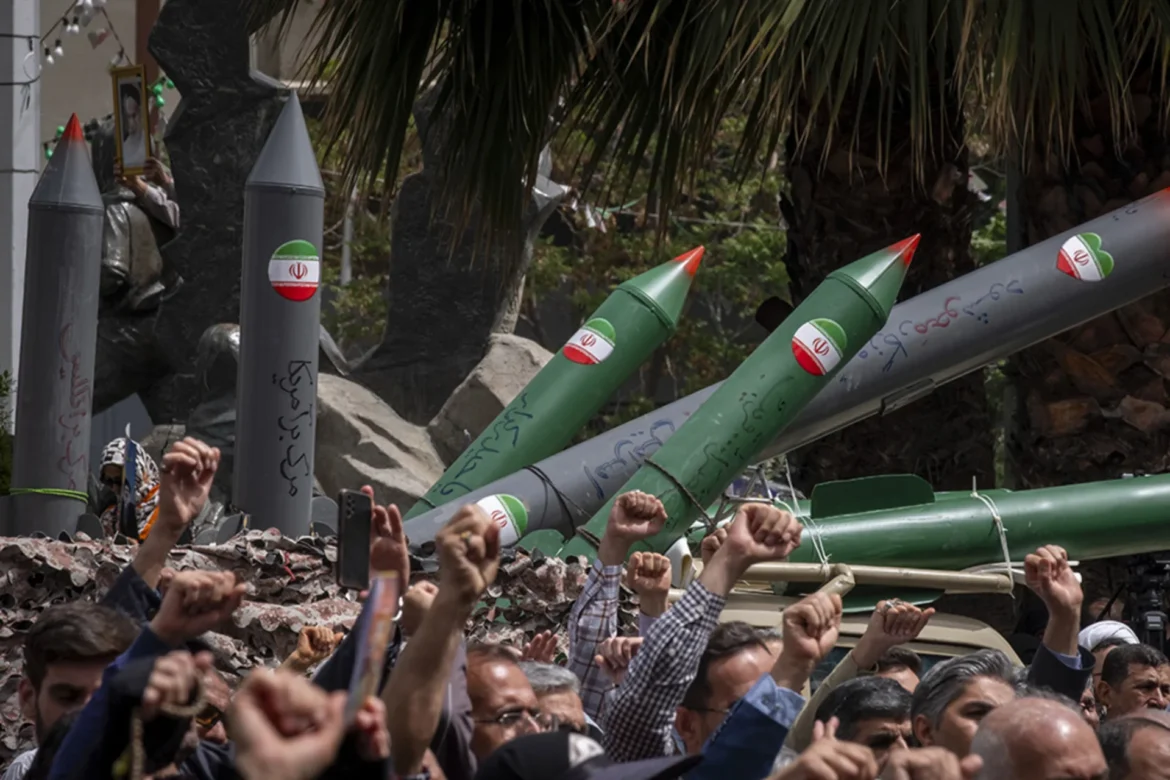
Israel’s threat perception is different in kind, not merely degree. For Jerusalem, Iran is not one concern among many; it is the central organising threat of national security, measured in Hezbollah rockets, underground tunnels, and the explicit ideological hostility of a state that has made the elimination of Israel a public objective. Israel’s strategic doctrine favours pre-emption and the sustained degradation of hostile capabilities. It has limited patience for phased agreements, inspection timelines, and 60-day windows. When Iranian parliamentary speaker Mohammad Bagher Ghalibaf told Washington through social media that Iran’s forces have “rebuilt themselves during the ceasefire period” and that any resumed American attack would be “more crushing and more bitter,” Israel heard a confirmation of what it always wants to hear: that pauses benefit the adversary.
Washington hears something different. American planners look at the Strait of Hormuz and see a systemic risk to global commerce. They look at China and Russia and see rivals who are learning from American operational difficulties in real time, draining U.S. resources while absorbing none of the costs. They look at a domestic electorate whose appetite for war has been exhausted by two decades of post-9/11 conflicts. As one analyst framing this divergence has put it: Washington globalizes the Iran problem while Israel regionalizes it. The result is two allies speaking the language of unity while following two different strategic calendars.
Prime Minister Benjamin Netanyahu reportedly expressed concerns about the emerging MOU during his Saturday call with Trump — particularly the provision ending the Israel-Hezbollah war in Lebanon, which Netanyahu wanted kept separate. “Bibi has his domestic considerations,” one American official noted with understated precision, “but Trump has the interests of the U.S. and the global economy to think about.” That sentence captures the distance between the two governments’ calculations at this moment more accurately than any diplomatic communiqué.
Pakistan’s Opening and What It Represents
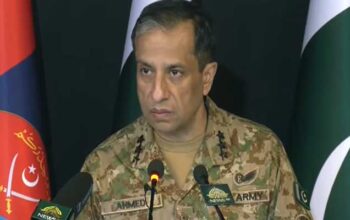
One of the more consequential and underappreciated aspects of this crisis has been the emergence of Pakistan as the primary diplomatic intermediary — a role confirmed publicly by Secretary of State Marco Rubio, who described Islamabad as “the primary interlocutor” in the negotiations. Field Marshal Asim Munir has shuttled between capitals with a frequency and seriousness that has given Pakistan an unusual moment of diplomatic relevance: the rare power that maintains workable relationships simultaneously with Tehran, Washington, Beijing, and the Gulf capitals.
Pakistan’s mediation deserves genuine acknowledgement, even as its fragility must be recognised. The 14-point Iranian framework that has emerged as the basis for the MOU — touching on sanctions relief, the future of the strait, limits on nuclear activities, and guarantees against renewed military action — represents months of patient work by Pakistani intermediaries, now joined by Qatar, Turkey, and the Gulf states in a broad coalition pressing both sides toward an exit. Prime Minister Shehbaz Sharif has offered to host the next round of direct talks.
That this architecture exists at all — that the world has not simply watched the conflict collapse into another open-ended military quagmire — is in no small measure a function of this diplomatic scaffolding holding together under extraordinary pressure.
The Narrow Path Forward
What would a genuinely successful outcome look like? Not Trump’s version — which has oscillated so many times that it has lost specific content — but a version grounded in the actual global interests and the demonstrable realities of this conflict.
It looks like this: an MOU that restores freedom of navigation in the Strait of Hormuz, ends the mutual blockades, and creates a structured negotiating process on the nuclear question — with real timelines, genuine inspections, and meaningful sanctions relief tied to verifiable Iranian steps. It requires the United States to be honest with itself that the three maximalist war aims Trump set — eliminating Iran’s nuclear program entirely, ending its ballistic missile capacity, and dismantling its regional proxy network — were never achievable through military action in any timeframe that an American democracy can sustain. It requires Iran to acknowledge that holding the global energy market hostage is a leverage play with diminishing returns and catastrophic humanitarian costs.
None of that is easy. The Carnegie Endowment for International Peace has noted that Iran may yet conclude that its ability to disrupt the global economy via the strait provides sufficient deterrence to begin quietly rebuilding its nuclear infrastructure — a path, analysts have warned, that could accelerate Tehran’s nuclear ambitions rather than constrain them, echoing North Korea’s trajectory. That is the most dangerous long-term outcome of a failed deal, and it should concentrate minds in Washington regardless of political affiliation.
Donald Trump would presumably prefer to be remembered as the man who brought Iran to heel. The record of the past three months suggests he will have to settle for something considerably less dramatic: an imperfect memorandum, negotiated through intermediaries, that walks back a war he helped start, on terms that would have seemed more favorable before the first strike was ordered. That is not nothing. Given where this conflict has been heading, it may be the most that responsible American statecraft can retrieve.
Copyright © 2021 Independent Pakistan | All rights reserved